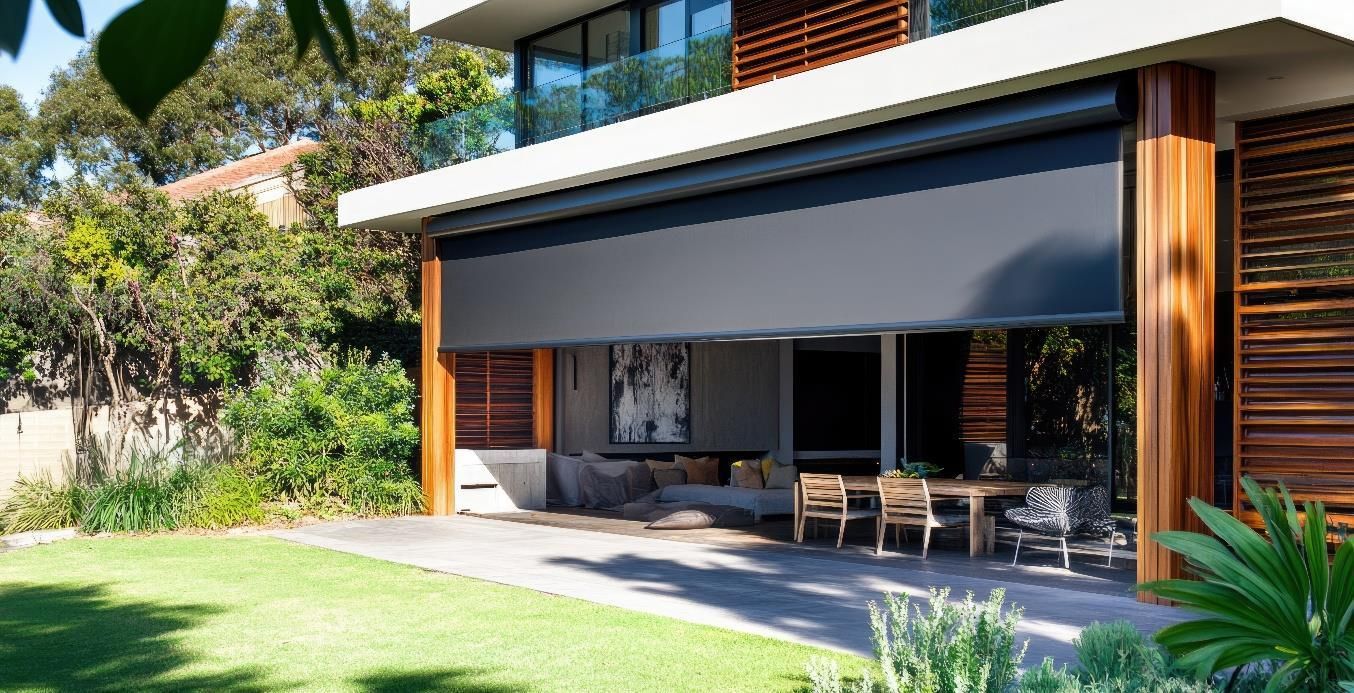
If you want the ability to shade your patio at a moment's notice and retract it completely when you do not need it, a folding arm awning is almost certainly what you are looking for. It is the most versatile, most popular, and — when chosen correctly — most satisfying shade solution available for South African homes and businesses.
This guide covers everything you need to know before buying: how the mechanism works, the different types available, motorised versus manual options, sizing considerations, what to look for in quality, how to maintain your awning, and how to get the right one specified for your specific situation.
What Is a Folding Arm Awning?
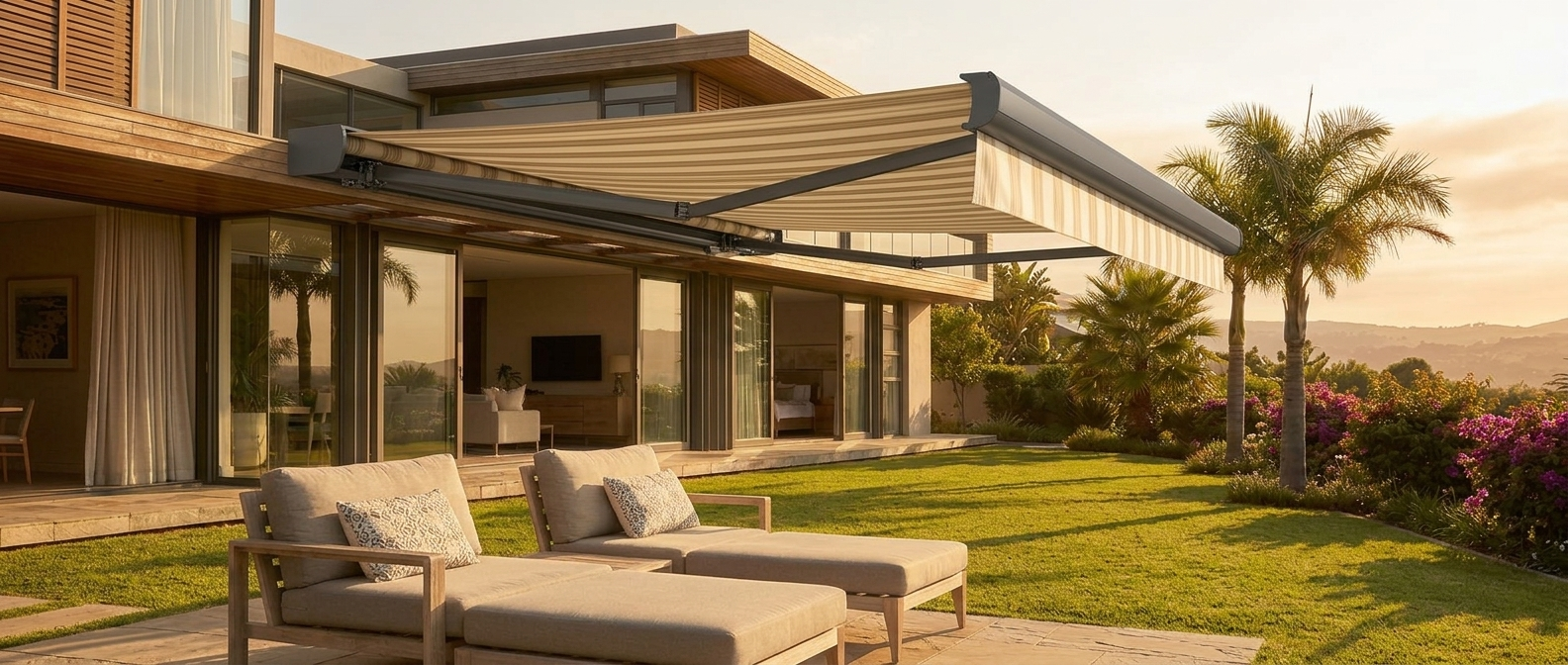
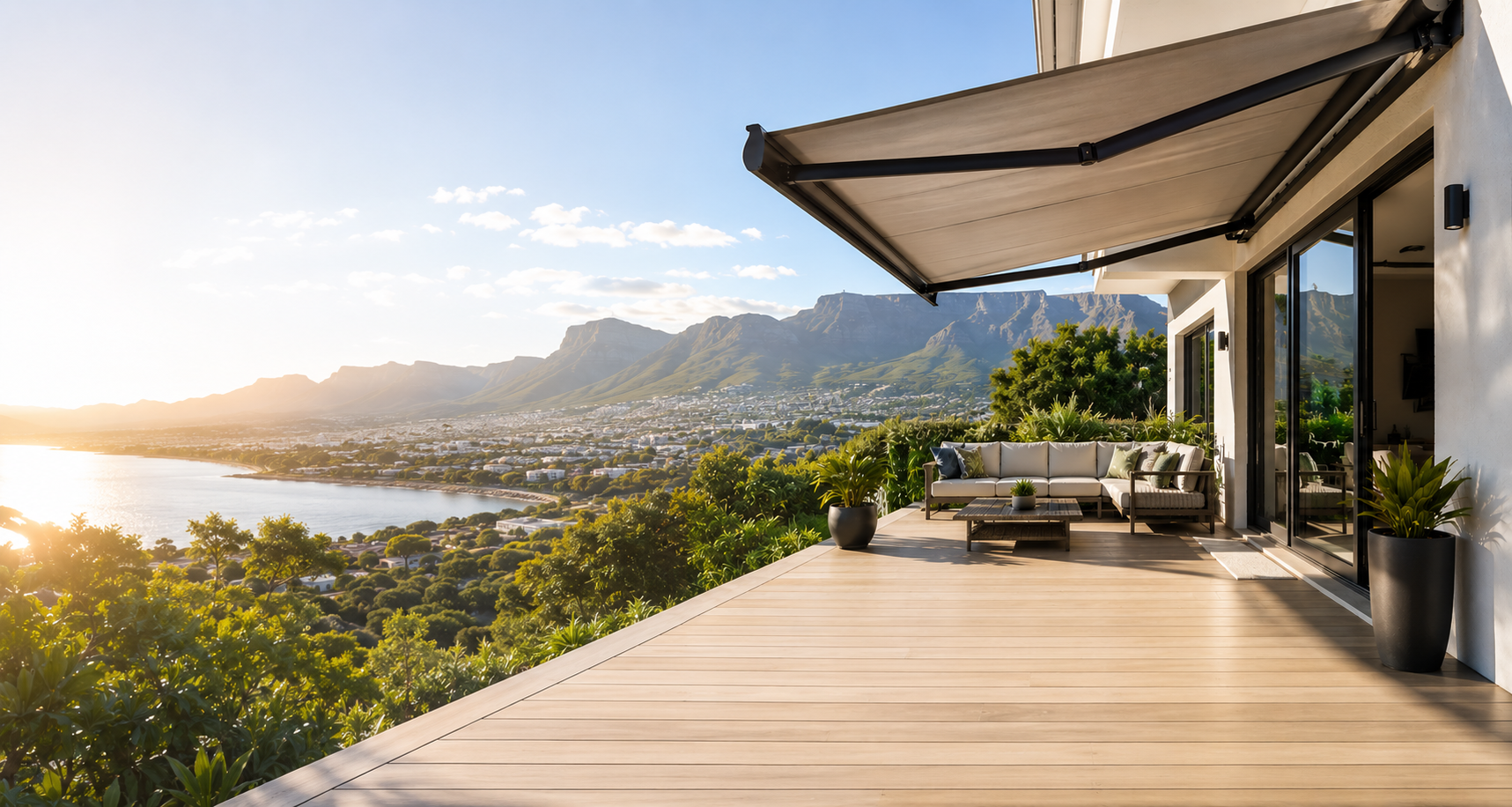
A folding arm awning — also known as a fold arm awning, retractable awning, or lateral arm awning — is a fabric shade system mounted to a wall or ceiling bracket above a door or window opening. The fabric is rolled onto a barrel when retracted and extended outward by a pair of articulated arms on either side when deployed.
The arms fold at a central elbow joint, allowing them to extend horizontally to their full reach or collapse back towards the wall. This articulation is what gives the system its name — and its distinctive silhouette when partially or fully extended.
Unlike fixed awnings, pergolas, or patio covers, a folding arm awning offers complete flexibility. Extend it fully for maximum shade on a hot afternoon. Retract it completely to let in winter sun. Stop it at any point in between to suit changing conditions. When retracted, it takes up minimal space against the wall and blends cleanly into the building facade.
How Does the Mechanism Work?
The core of a folding arm awning system consists of four main components:
- The roller barrel — a horizontal tube onto which the fabric is wound when the awning is retracted
- The lateral arms — a pair of articulated arms on either side of the awning that extend and support the fabric when deployed
- The fabric — a purpose-woven acrylic or solution-dyed polyester fabric tensioned across the arms
- The drive mechanism — either a manual crank handle, a spring-loaded cassette, or a motorised tube motor
When the awning is extended, the arms unfold outward and the fabric unrolls from the barrel simultaneously. A built-in pitch adjustment at the wall bracket controls the angle of the awning, allowing the pitch to be set between approximately three and thirty-five degrees depending on the model — typically set steeper in areas with heavy afternoon rain, and flatter where shade coverage is the primary requirement.
Most quality folding arm awnings use a constant-tension spring system in the arms that keeps the fabric under consistent tension at any degree of extension. This prevents the fabric from sagging in the middle and ensures a clean, taut appearance whether the awning is extended a third of the way, halfway, or fully deployed.
Types of Folding Arm Awnings Available in South Africa
Canvas Folding Arm Awnings
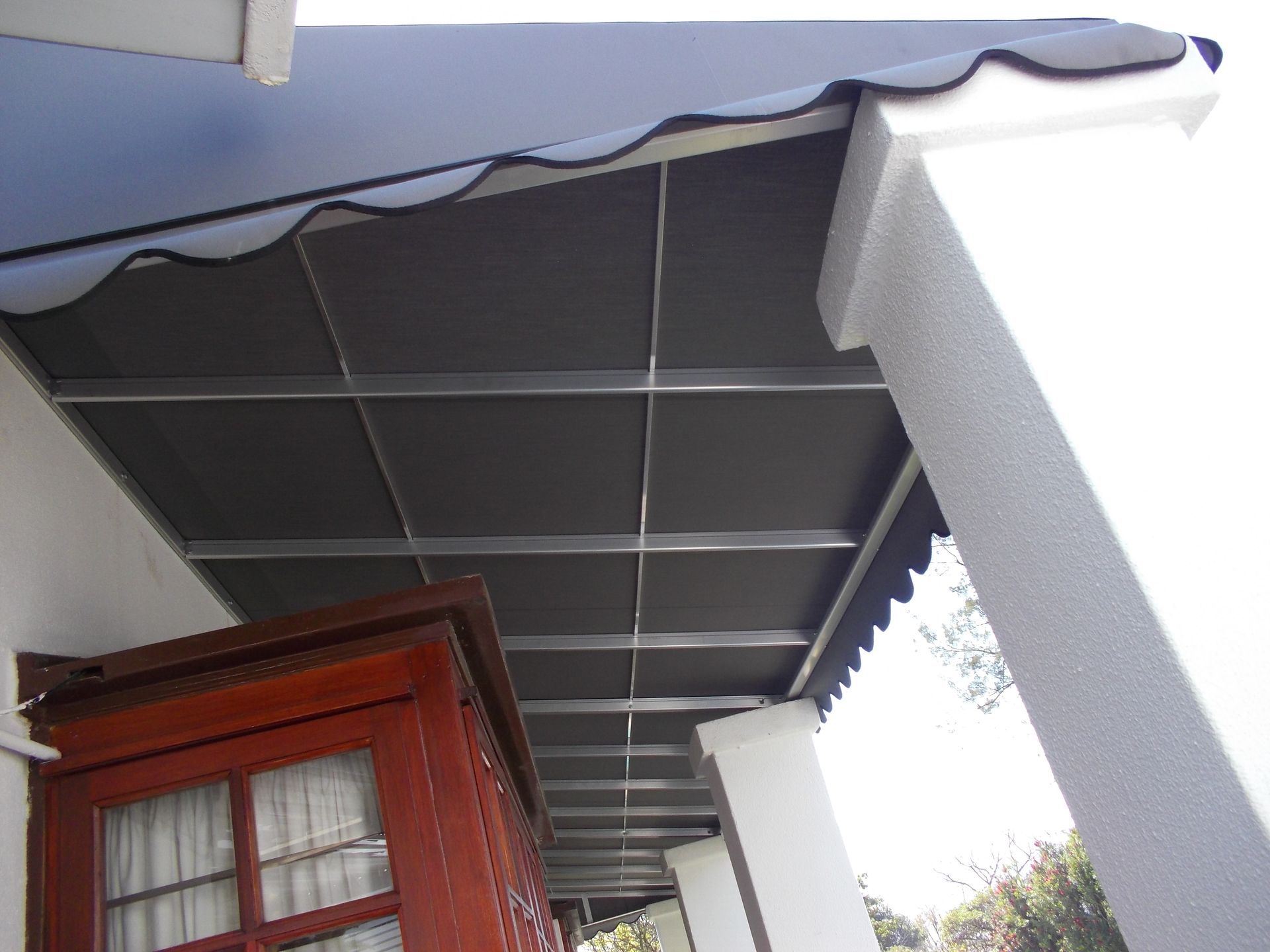
Canvas acrylic fabric awnings are the classic and most widely installed type in South Africa. Solution-dyed acrylic fabric — the same material used in premium marine upholstery — is inherently UV-resistant, colourfast, breathable, and water-resistant. Quality acrylic fabrics carry an eight to ten year UV and fade warranty from manufacturers such as Sunbrella (USA) and Dickson (France), both available through South African suppliers.
The advantages of canvas folding arm awnings include the enormous choice of fabric colours and patterns available, the natural breathability of the fabric (which reduces the heat build-up under the awning compared to solid panels), and the replacement options — when a fabric eventually fades or tears, only the fabric needs replacing, not the entire mechanism.
For more on fabric options and their durability in the South African climate, see our detailed guide to canvas awnings.
Aluminium Louvre Folding Arm Awnings
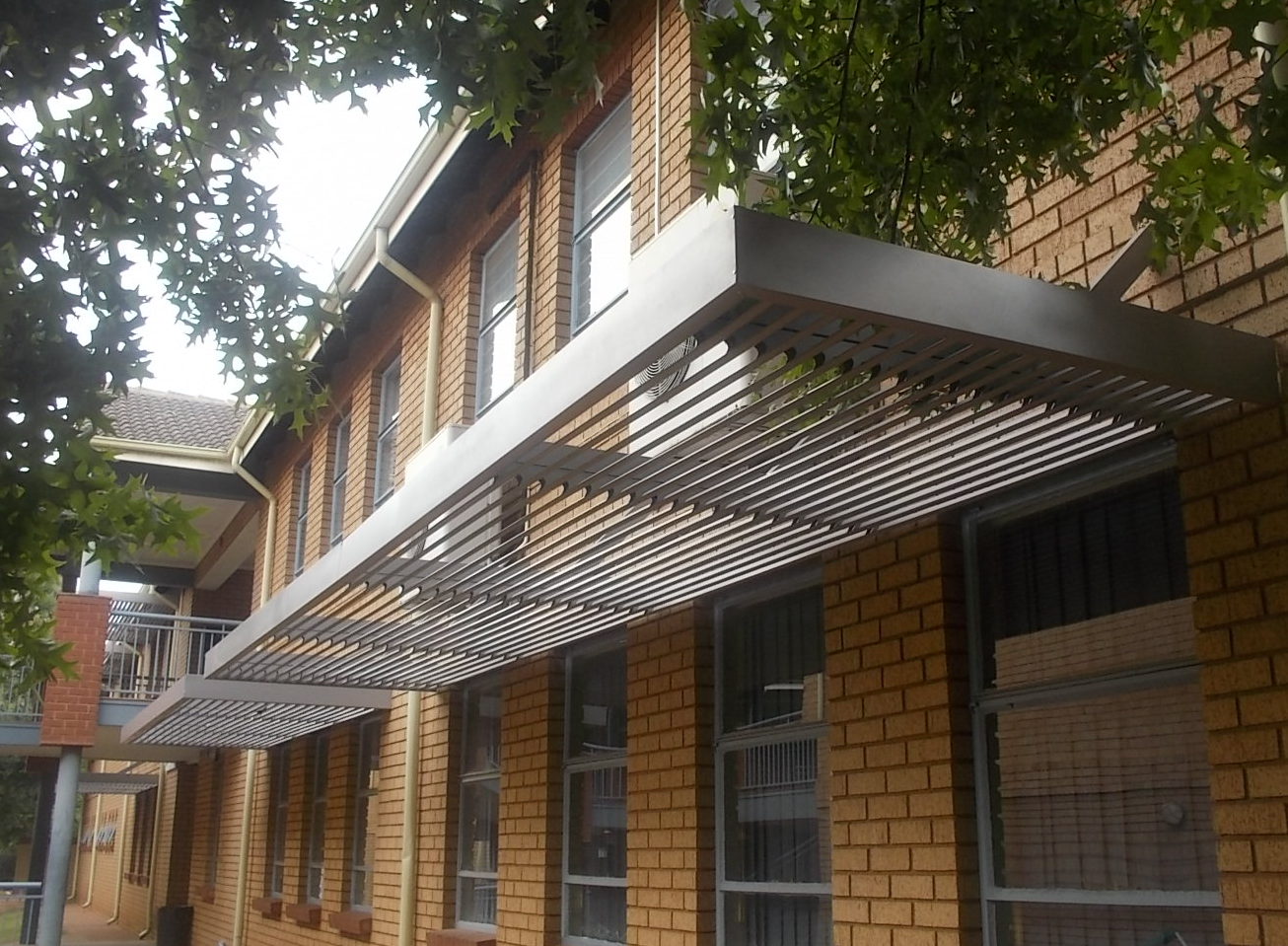
Some folding arm awning systems use louvre blades rather than fabric — articulated aluminium slats that fold into a compact cassette when retracted. These systems offer the clean appearance and durability of aluminium with the flexibility of a retractable system. They suit contemporary architectural styles and commercial applications where a heavier-duty, more permanent-looking solution is preferred.
Aluminium louvre folding arm systems typically carry a longer structural warranty than fabric systems and require less maintenance. They are also slightly heavier and more complex to specify — wider spans require additional support points or a reinforced structure.
Cassette Folding Arm Awnings
Both canvas and some louvre folding arm awnings are available in cassette versions, where the entire awning — barrel, fabric, and folded arms — is housed in an enclosed aluminium cassette when retracted. The cassette protects the fabric and mechanism from dust, bird droppings, UV degradation, and incidental weather when not in use.
A cassette awning has a cleaner, more architectural appearance when retracted, as the housing gives the awning a finished, built-in look rather than the visible rolled fabric of an open-roll system. For installations where appearance matters — hotels, restaurants, premium residential — cassette systems are the preferred specification.
Manual vs Motorised: Which Is Right for You?
Folding arm awnings are available in manual and motorised versions. The choice depends on the size of the awning, how frequently it will be used, and what level of convenience is needed.
Manual Folding Arm Awnings
Manual systems use a hand crank — either a fixed handle or a removable crank rod — to extend and retract the awning. They are perfectly appropriate for awnings up to approximately 4m wide, where the crank force required is manageable. Manual systems are more affordable upfront, have fewer potential points of failure, and are simple to maintain.
The practical limitation of a manual system is remembering to retract it. A sudden afternoon storm can cause fabric damage if a manual awning is left extended — the user must be present and available to retract it. For holiday homes or frequently unattended properties, a motorised system is a better choice.
Motorised Folding Arm Awnings
Motorised systems use a tubular electric motor inside the roller barrel to extend and retract the awning at the touch of a button. Most South African suppliers offer systems compatible with Somfy or equivalent motor platforms, which support:
- Wired wall switches for simple on/off control
- Radio remote controls for wireless operation from anywhere on the patio
- Home automation integration — control via smart home platforms including Apple HomeKit, Google Home, and third-party systems
- Wind sensors — an anemometer that automatically retracts the awning when wind speed exceeds a preset threshold
- Sun sensors — a light sensor that automatically extends the awning when direct sun is detected and retracts it when it passes
Motorised folding arm awnings are our recommendation for any awning wider than 4m, for any installation where a wind sensor is desired, and for clients who want the convenience of automated control. For more detail on motorised awning systems and their control options, see our complete guide to motorised awnings.
How Does a Folding Arm Awning Compare to Other Shade Options?
Choosing between a folding arm awning and other shade solutions comes down to what you need the space to do.
Folding Arm Awning vs Louvre Awning
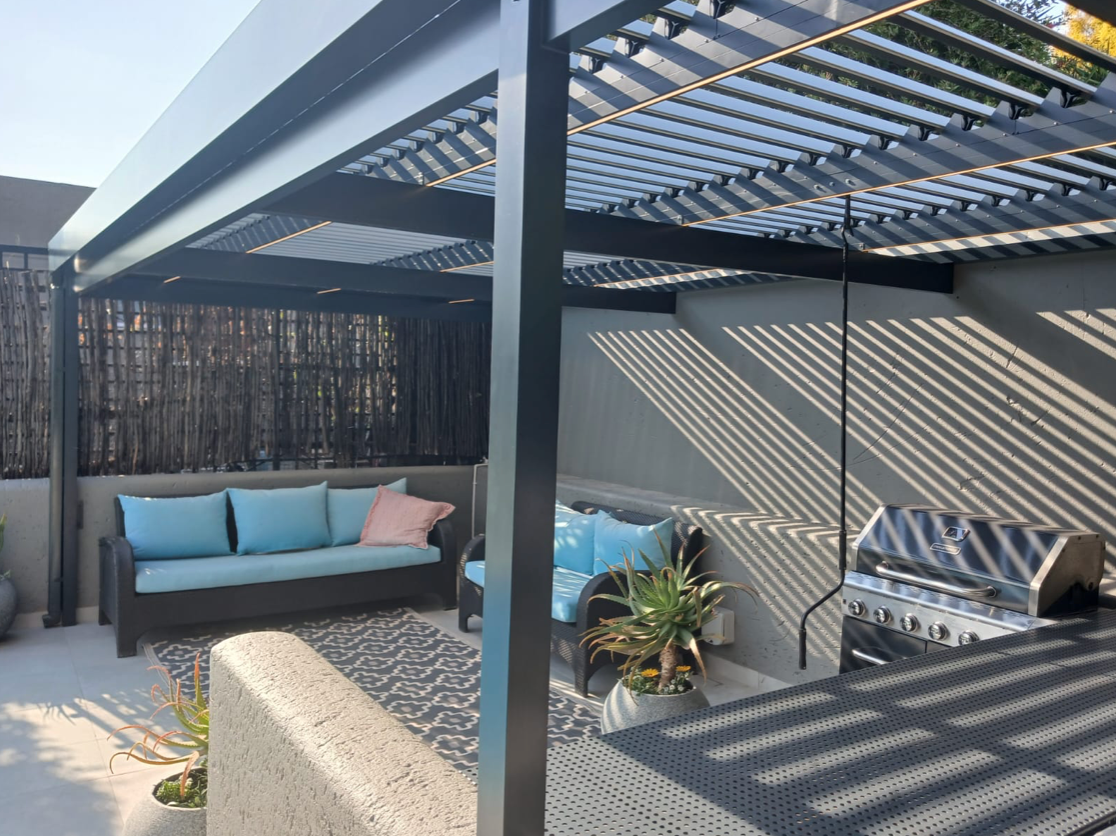
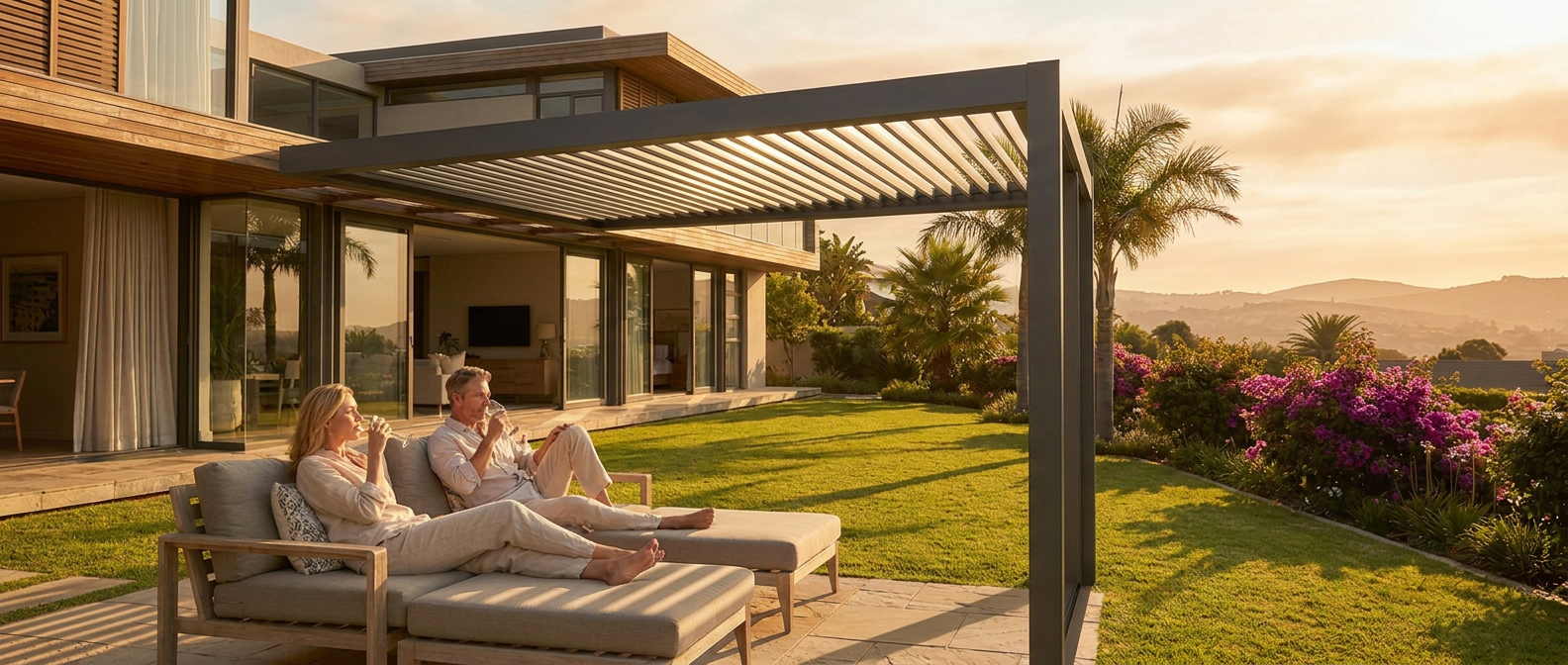
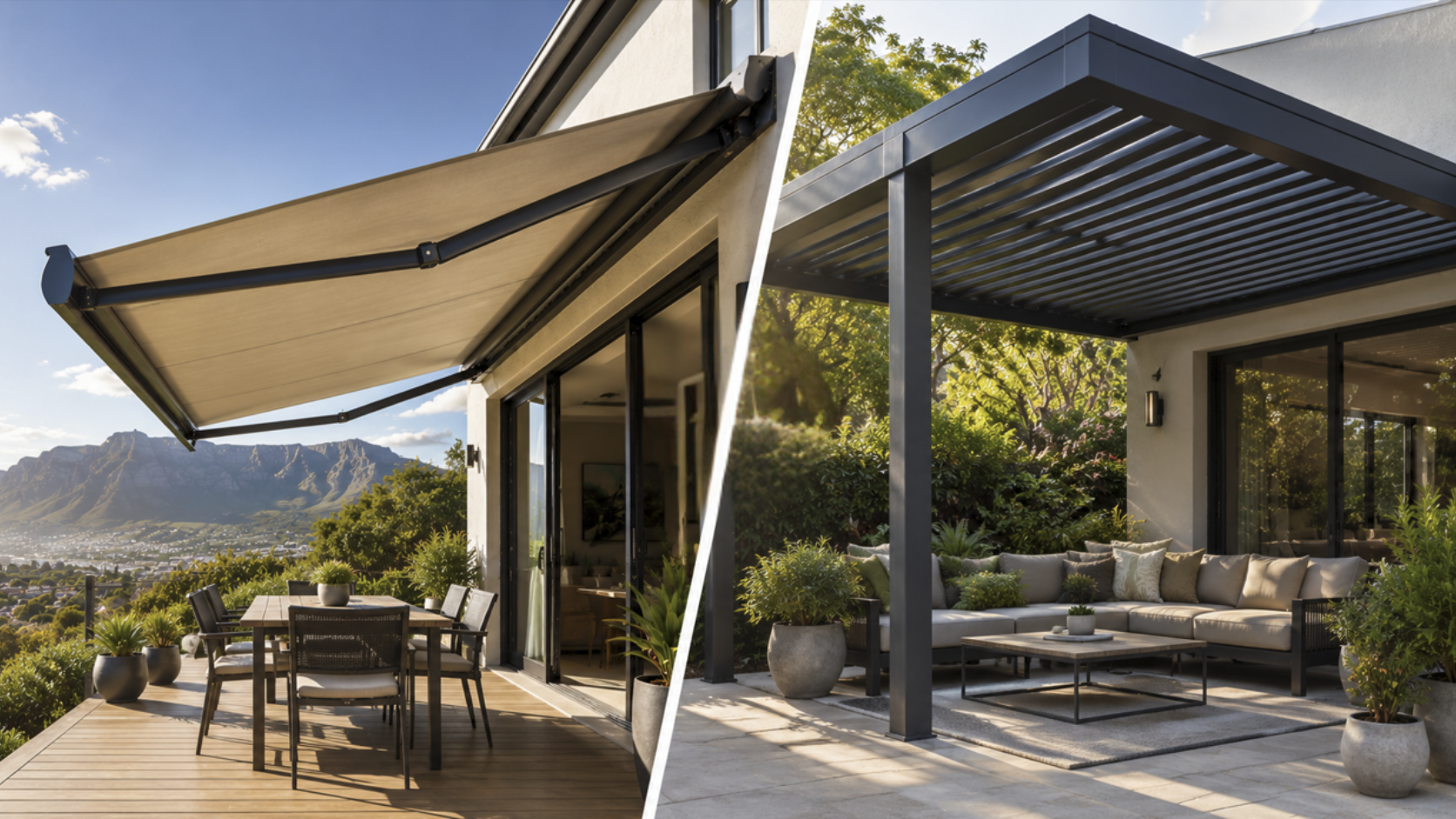
A louvre awning (adjustable aluminium louvre roof) provides permanent overhead structure with adjustable ventilation. It cannot be fully retracted — it is a built structure. A folding arm awning disappears completely when not needed. If you want a clean, unobstructed outdoor view in winter, a fold arm awning is the right choice. If you want a year-round covered outdoor room that is always there, a louvre awning is likely better.
Folding Arm Awning vs Fixed Acrylic Awning
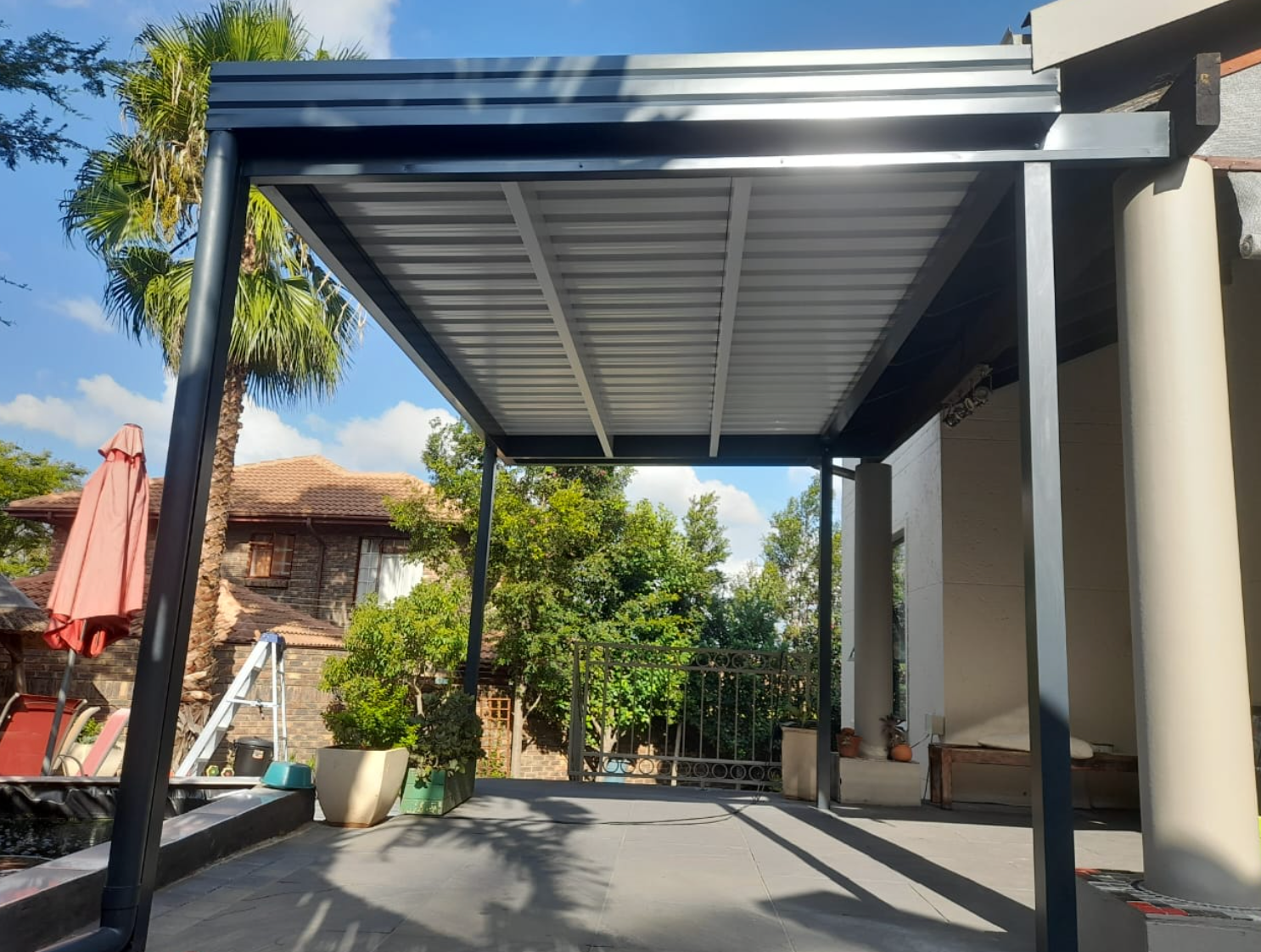
A fixed acrylic awning is always deployed — it provides permanent shade at a fixed position above a door or window. It is simpler, more affordable, and requires no mechanism. But it shades the same area every day of the year, which can be a disadvantage in winter when sun penetration is wanted. A folding arm awning gives you the option to shade or not shade as needed.
Folding Arm Awning vs Shade Sails
Shade sails are a lower-cost option but cover a different brief. They create a fixed shade shape at a fixed point in the day, cannot be retracted, and typically do not provide water resistance. For a covered, retractable, weather-responsive solution, a folding arm awning is clearly superior.
Sizing and Configuration
Folding arm awnings are manufactured to order in South Africa for most suppliers, meaning the width and projection (how far out the arms extend) can be specified precisely for the installation. Understanding the relationship between these two dimensions is important:
- Width is measured across the face of the wall — the horizontal span of the awning
- Projection is the depth of shade coverage — how far out from the wall the fabric reaches when fully extended
- Most residential folding arm awnings range from 2m to 6m in width
- Projection is typically between 1.5m and 3.5m, depending on the arm model
- Very wide awnings — above 6m — often require a centre support bracket or are achieved by installing two adjacent units
The pitch of the awning (the downward angle from horizontal) affects both the visual appearance and the rain runoff. A steeper pitch runs rain off more effectively but reduces usable headroom at the outer edge. Most installers recommend a pitch of 5–15 degrees for typical South African residential applications.
What to Ask Before You Buy
When getting quotes for a folding arm awning, ask the following questions:
- What fabric brand and product is specified, and what UV/fade warranty does it carry?
- Is the frame powder-coated aluminium or steel? (Aluminium is preferred for longevity in South African conditions.)
- Is this an open-roll or cassette system?
- What arm reach and minimum recommended mounting height apply to this model?
- Is the motor Somfy or equivalent (important for long-term spares availability)?
- Does the installation include a wind sensor, and what wind speed triggers automatic retraction?
- What is the warranty on the mechanism, the fabric, and the motor separately?
Maintenance: Keeping Your Folding Arm Awning in Good Condition
A quality folding arm awning requires minimal maintenance, but a few simple habits will significantly extend its life:
- Retract the awning in strong winds — even motorised awnings with wind sensors should be retracted if wind conditions are severe. The fabric and arms are designed for typical wind loads, not storms.
- Clean the fabric regularly — brush off leaves and debris with a soft brush. Wash down with a mild soap solution two to three times per year. Rinse thoroughly and allow to dry completely before retracting.
- Never retract a wet awning — rolling wet fabric against itself encourages mildew. If the awning gets wet in use, leave it extended and allow it to dry before retracting.
- Lubricate the arm joints annually — a light application of silicone lubricant on the arm pivot points keeps operation smooth and prevents premature wear.
- Check the mounting brackets annually — inspect fixings into the wall or ceiling for any movement. A loosened fixing puts stress on the awning structure.
- Have the motor serviced every few years if motorised — the motor and limit switches should be checked by a qualified installer.
Why Choose Awning Warehouse for Your Folding Arm Awning?
Awning Warehouse has been supplying and installing quality awnings across South Africa for over twenty years. Our folding arm awnings are:
- Manufactured to order in our Randburg facility using quality European and local frame components
- Available in canvas acrylic fabric from leading international brands including Sunbrella and Dickson
- Supplied with motorised options using Somfy motor systems for full smart home integration
- Installed by our own trained installation teams — not subcontracted labour — across Johannesburg, Pretoria, Cape Town, Durban, and major centres nationally
- Backed by warranty on both the mechanism and the fabric, with local support for any service requirements
We service Johannesburg, Pretoria, Randburg, Sandton, Centurion, Cape Town, Durban, Bloemfontein, Port Elizabeth, Polokwane, Mbombela and surrounding areas.