Commercial Awnings South Africa: The Complete Guide for Businesses
Your business premises makes a statement before a single customer walks through the door. The facade — the signage, the entrance, the overall appearance from the street — shapes first impressions that directly influence whether potential customers choose to engage with your business or walk past.
A quality commercial awning is one of the most impactful and cost-effective facade investments a South African business can make. It provides weather protection for customers and staff, reduces solar heat gain through windows and glass facades, creates a visually distinctive branded feature, and signals a level of quality and permanence that attracts the right customers.
This complete guide covers everything South African business owners, property managers, and facilities teams need to know about commercial awnings — the types available, what to look for, how to specify the right solution for different business types, and why professional design and installation matters.
Why Commercial Awnings Are Different to Residential
Commercial awnings serve many of the same fundamental purposes as residential awnings — shade, weather protection, UV reduction — but the commercial context introduces additional requirements that make specification more complex:
Durability and Load Requirements
Commercial awnings are subject to significantly more wear than residential installations. Higher foot traffic, more frequent operation, exposure to cleaning chemicals, and the reputational risk of a failure in a public-facing location all demand higher specification materials and more robust construction than a standard residential awning.
Commercial awning frames are typically fabricated from heavier gauge aluminium or steel profiles. Fixings must account for higher wind loads, particularly for canopies over building entrances where wind tunnelling effects can create significant uplift forces. All structural elements should be engineered for the specific installation rather than selected from a standard residential range.
Branding and Visual Identity
For most businesses, a commercial awning is a branding opportunity as much as a functional installation. The colour, material, typography, and overall design of the awning should integrate with and reinforce the brand's visual identity — communicating the right message to the right audience.
A premium restaurant communicates quality through a sleek black powder-coated louvre canopy with brass accent details. A family-oriented retail business might choose a warm canvas awning in brand colours with printed signage. A corporate office projects professionalism through clean aluminium architecture. Every choice carries a brand message.
Compliance and Planning
Commercial awning installations in South Africa may be subject to local municipality regulations regarding signage, projection over public footpaths, and structural requirements. Sectional title commercial schemes and shopping centre tenants typically require landlord or body corporate approval before installation. Awning Warehouse navigates these requirements on behalf of our commercial clients as part of the design and specification process.
Types of Commercial Awnings — Which Is Right for Your Business?
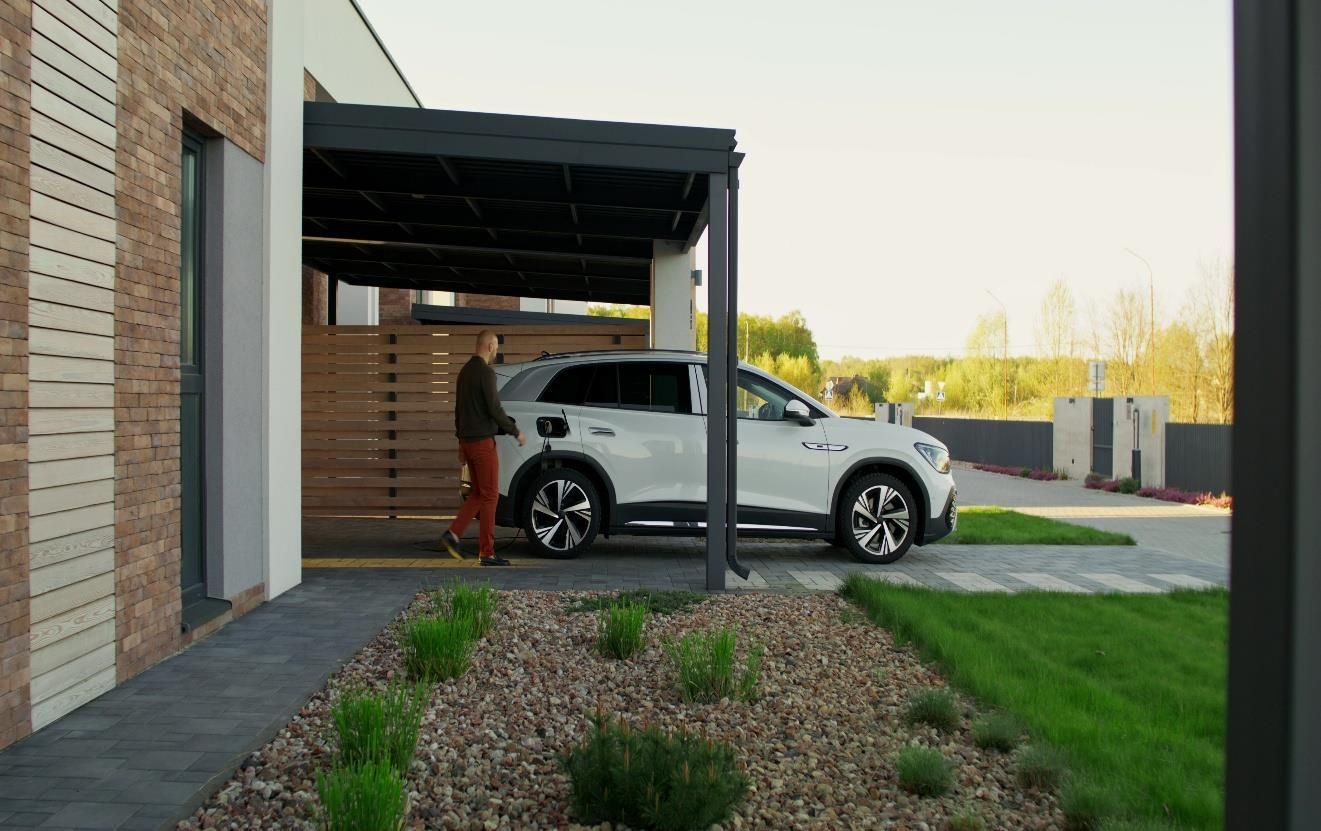
1. Fixed Aluminium Canopies
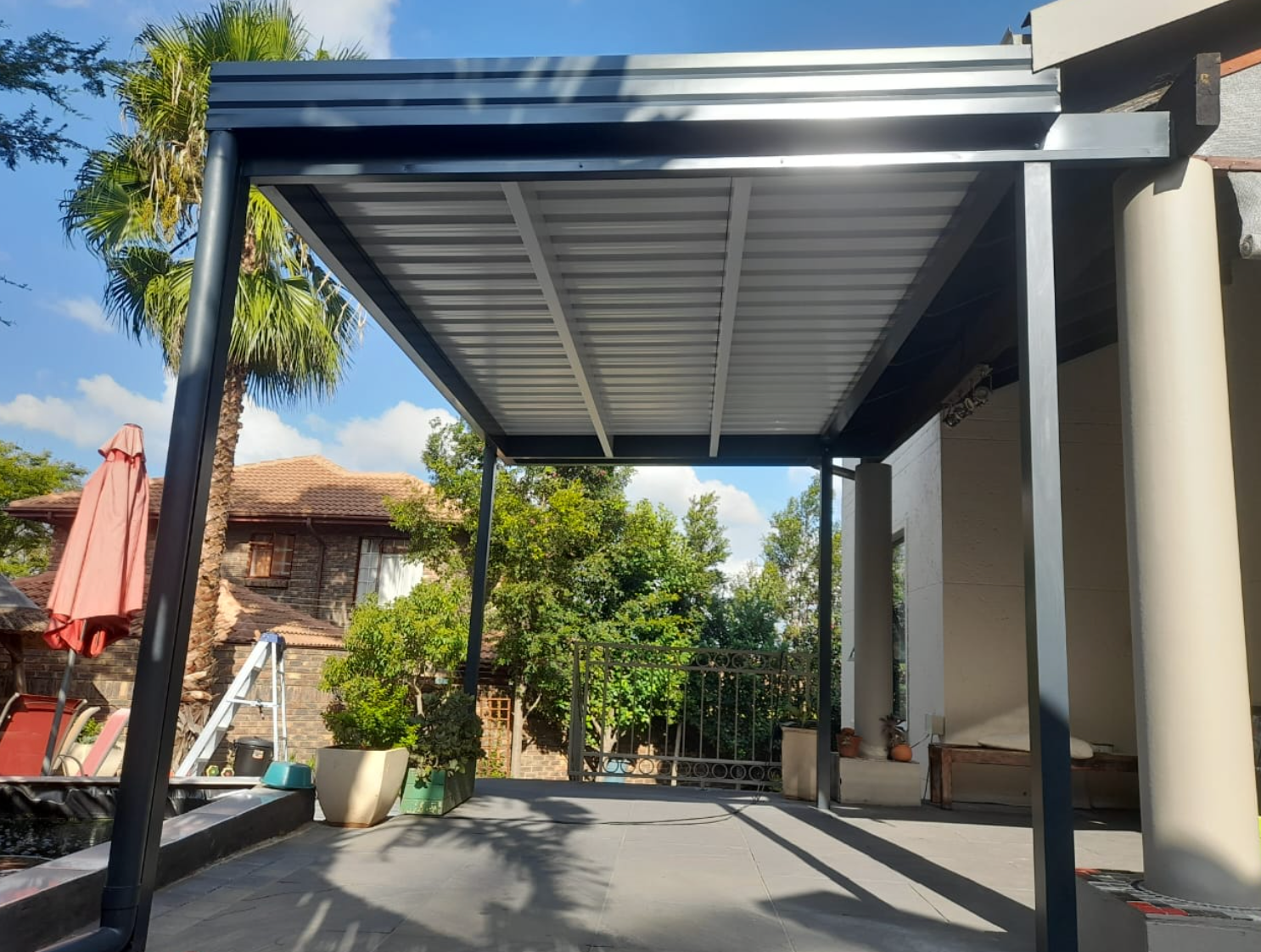
Fixed aluminium canopies are the most widely used commercial awning solution in South Africa. A rigid aluminium structure — frame, cladding, and fascia — is permanently fixed to the building facade above the shopfront, entrance, or window. The result is a clean, architectural feature that requires minimal maintenance and provides constant weather and sun protection.
Fixed aluminium canopies are available in any powder-coat colour and can be specified with flat, sloped, or curved profiles. They accept integrated signage, lighting, and cladding panels — making them a complete branded facade solution rather than just a weather cover.
- Best for: Retail shopfronts, service businesses, building entrances, commercial property facades
- Key advantage: Permanent, zero-maintenance, full branding integration
- Typical application: Single-storey shopfronts, building entrance canopies, drive-through covers
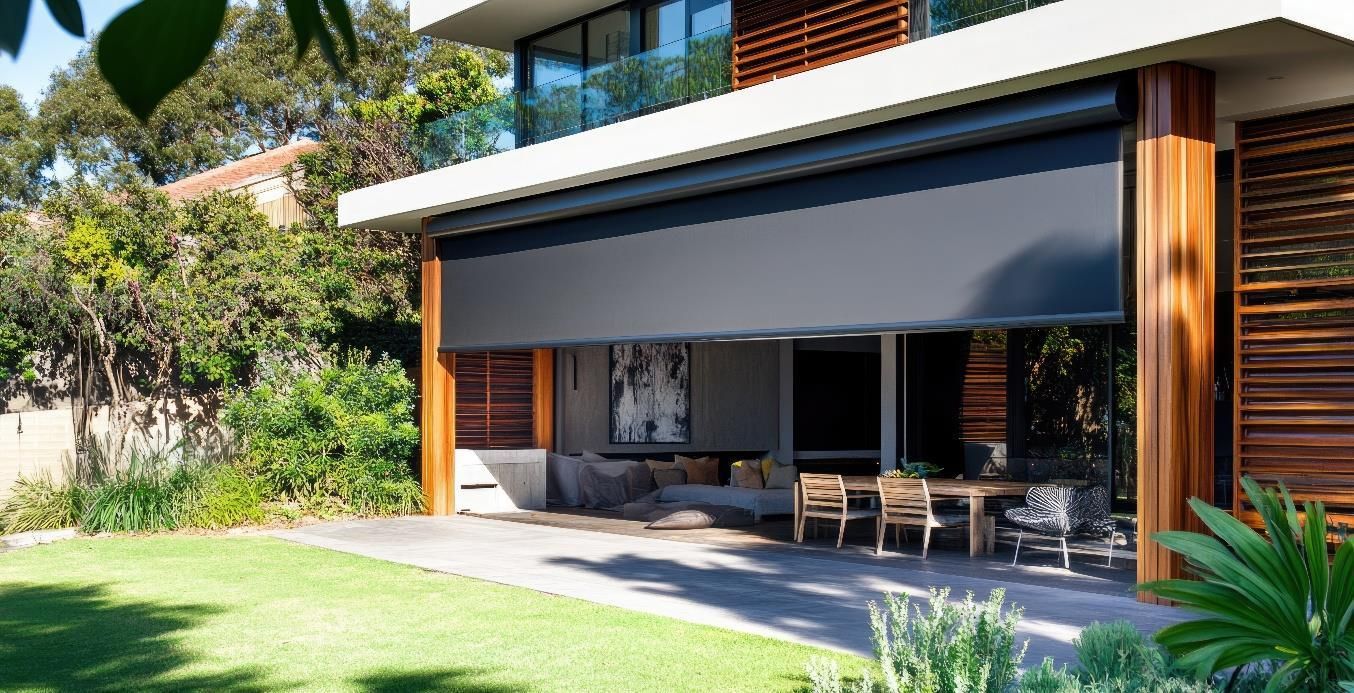
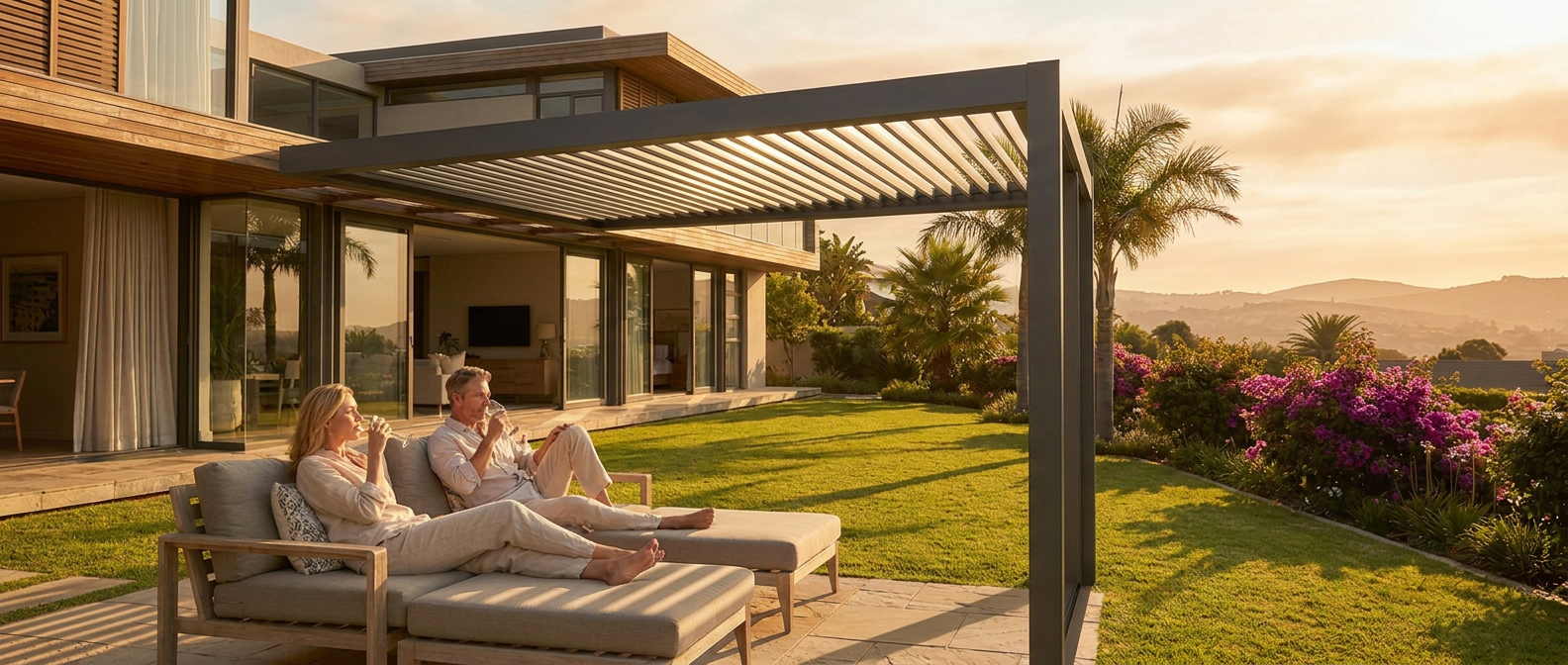
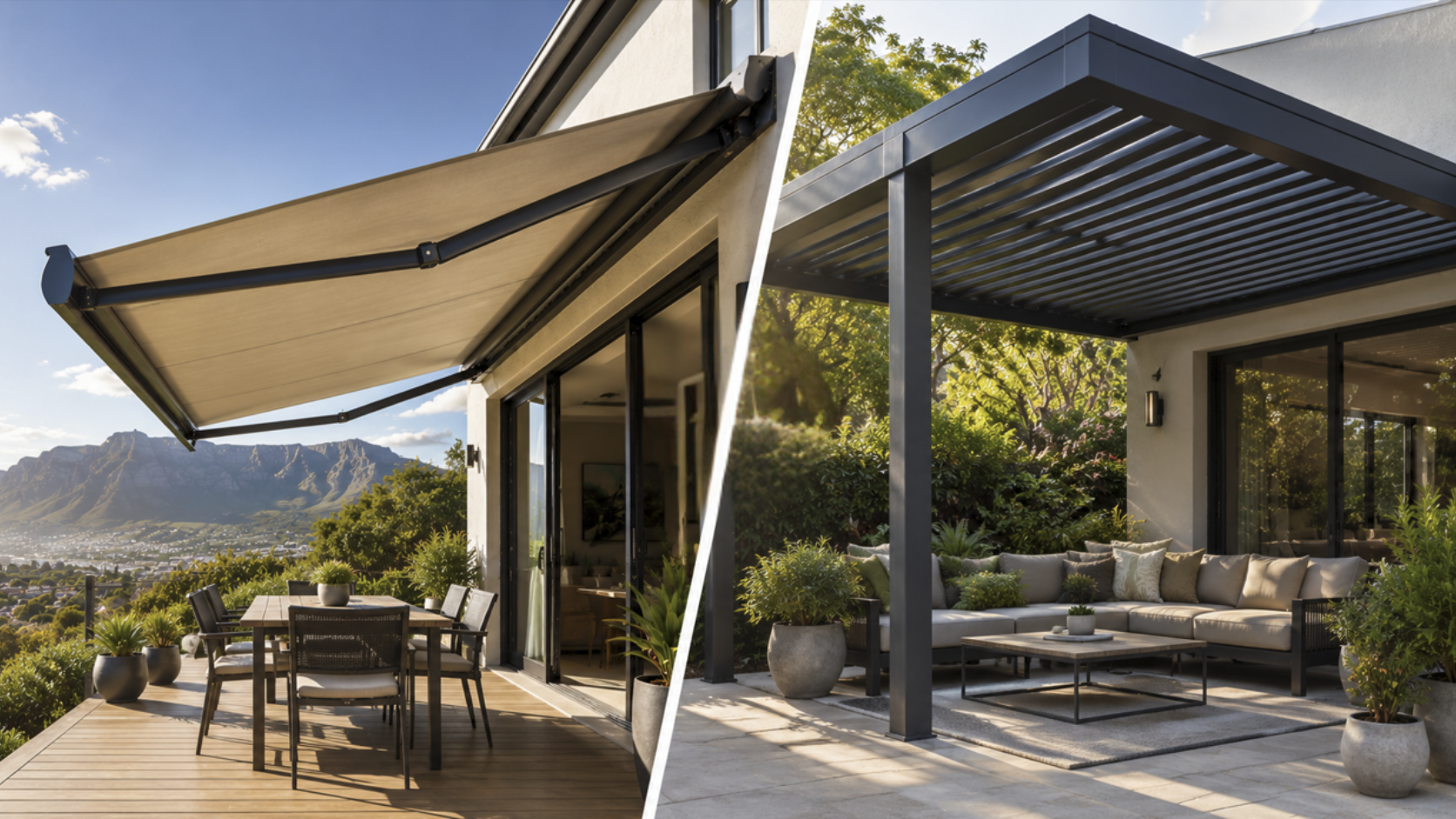
2. Adjustable Louvre Awnings — Commercial Grade
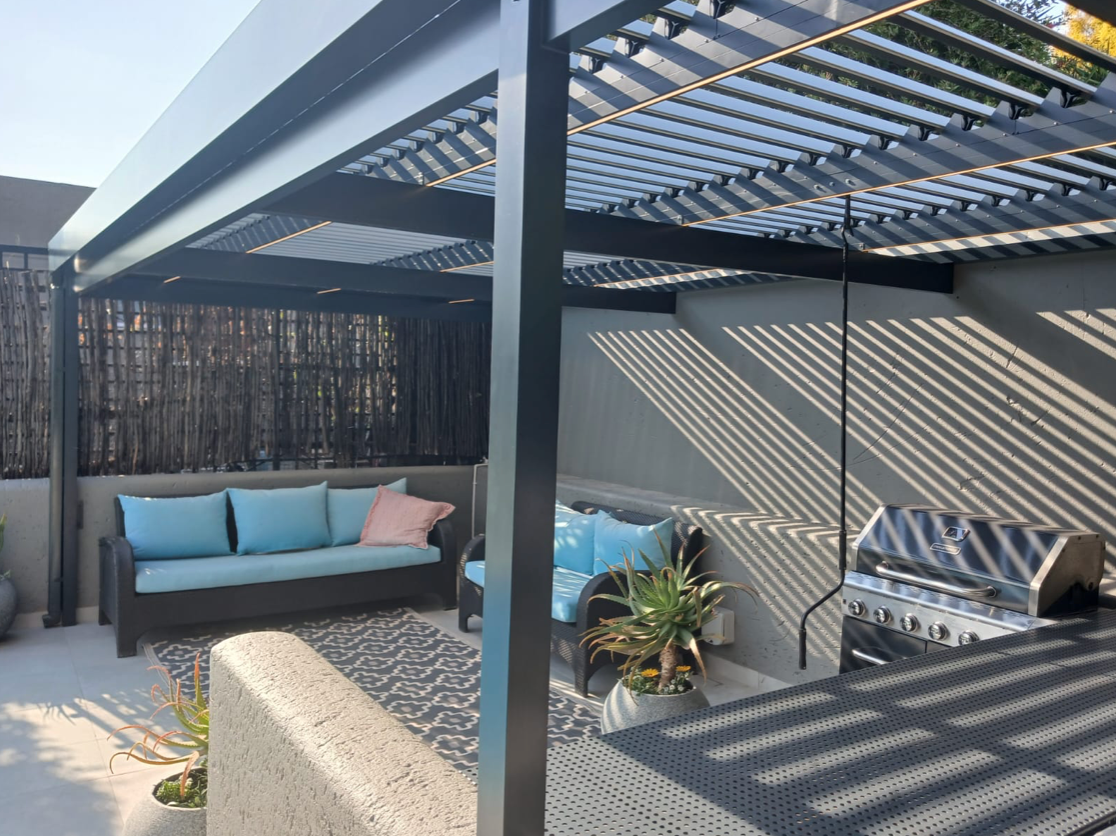
Commercial-grade louvre awnings are increasingly specified for South African hospitality, retail, and office applications where a premium, flexible shade solution is required. The rotating aluminium blade system gives property managers complete control over light, shade, ventilation, and weather protection — adapting the space to changing conditions throughout the day.
For outdoor dining areas, beer gardens, rooftop terraces, and commercial entertainment spaces, a motorised louvre system with integrated rain and wind sensors creates a fully automated, all-weather outdoor area that maximises revenue-generating capacity regardless of the weather.
- Best for: Restaurants, hotels, bars, entertainment venues, premium retail, corporate outdoor spaces
- Key advantage: All-weather flexibility, premium appearance, motorised automation
- Typical application: Restaurant terraces, hotel pool areas, rooftop bars, corporate outdoor entertaining
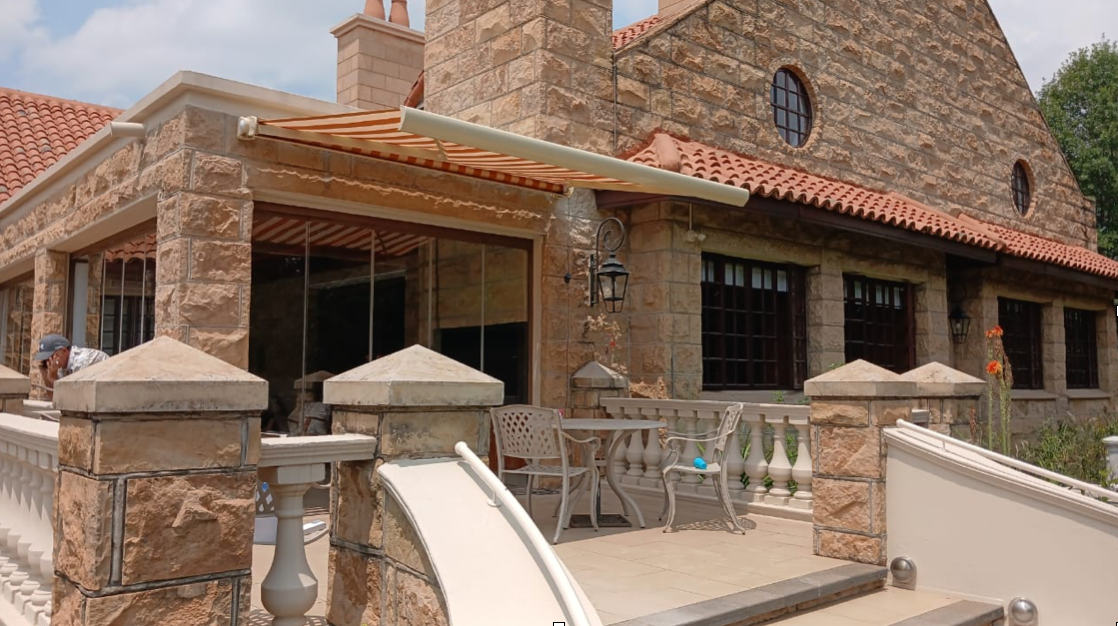
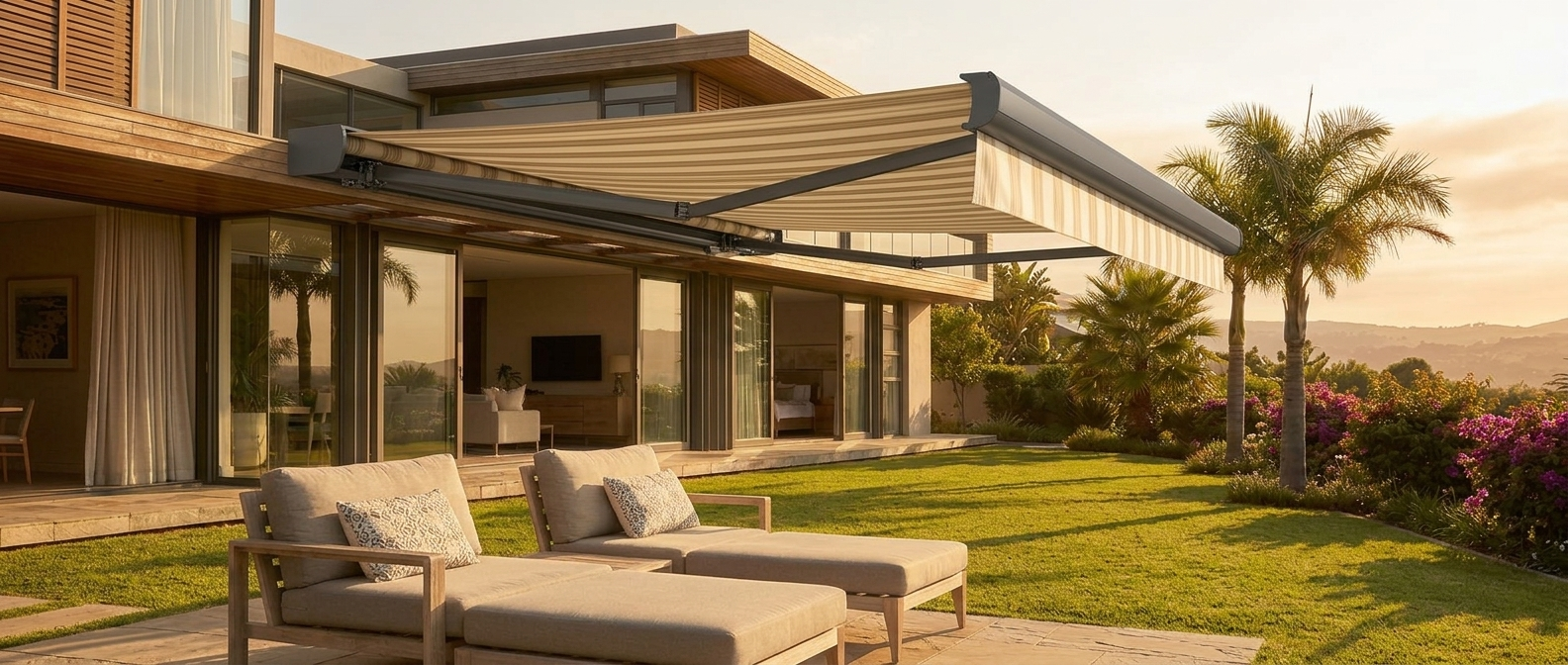
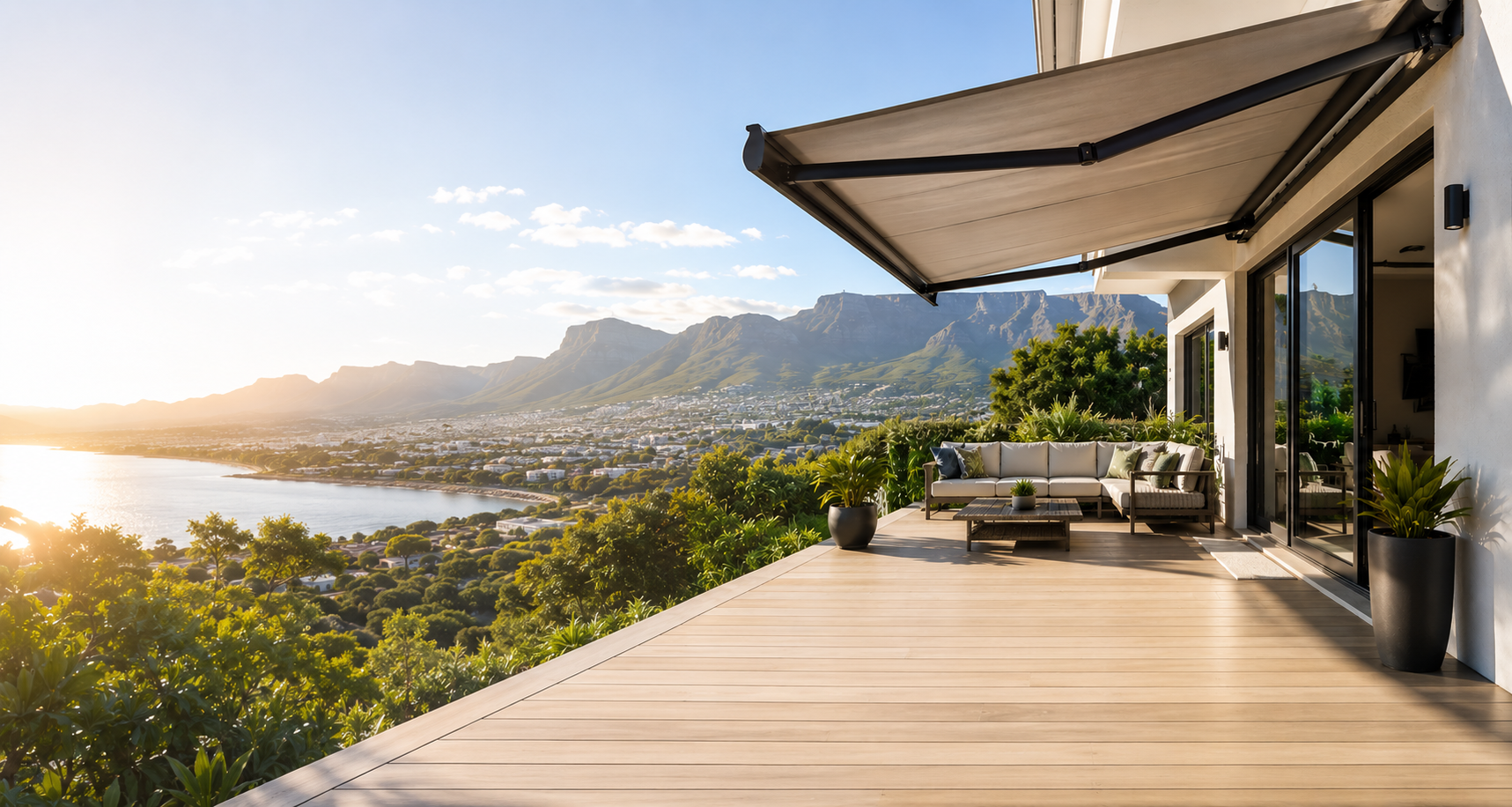
3. Retractable Commercial Awnings
Retractable fold-arm awnings scaled for commercial applications provide flexible shade over larger outdoor areas — restaurant terraces, outdoor seating areas, and commercial entertainment spaces. Available in manual or motorised configurations with commercial-grade motors rated for frequent daily operation, they extend the usable hours of outdoor commercial spaces during peak summer months.
- Best for: Restaurants, cafes, outdoor retail, commercial entertainment spaces
- Key advantage: Flexibility between open sky and shade, large span coverage
- Typical application: Restaurant and cafe terraces, outdoor retail areas
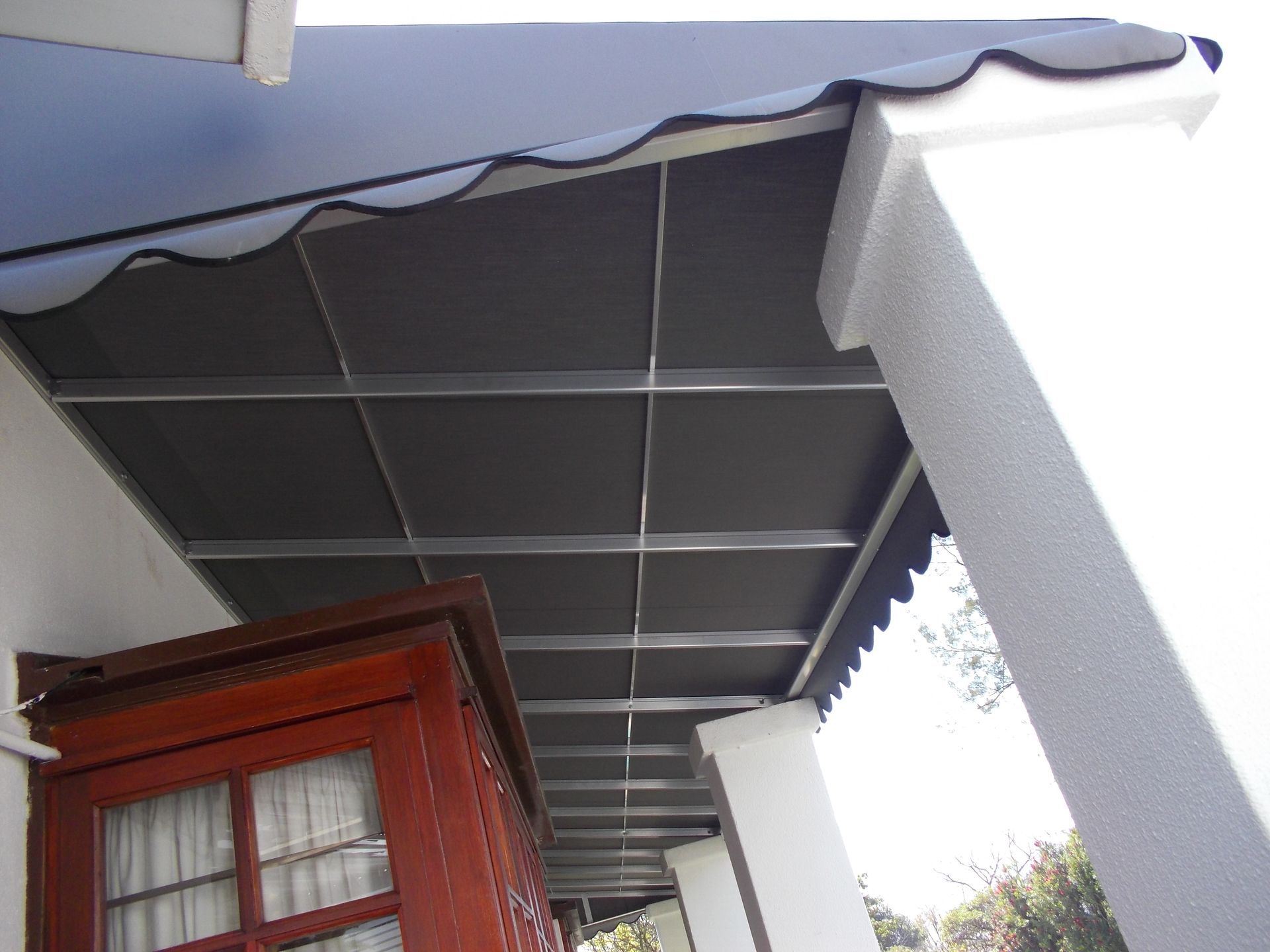
4. Canvas and Fabric Awnings
Canvas and acrylic fabric awnings remain a popular choice for retail and hospitality businesses that want a traditional, warm aesthetic. The fabric provides excellent UV protection and is available in a virtually unlimited range of colours and patterns — making it the most flexible option for precise brand colour matching.
Commercial-grade acrylic fabrics are solution-dyed for UV stability, water-resistant, and available with printed graphics for integrated signage. They are typically mounted on fixed or retractable aluminium frames.
- Best for: Boutique retail, cafes, restaurants, delis, market stalls, heritage buildings
- Key advantage: Unlimited colour options, brand colour precision, traditional aesthetic
- Typical application: Shopfront canopies, cafe entrances, market structures
5. Polycarbonate Commercial Canopies
Polycarbonate canopies over commercial entrances, walkways, and covered areas combine weather protection with natural light transmission — keeping covered areas bright and welcoming rather than dark and enclosed. The high impact resistance of polycarbonate is particularly valuable in commercial applications where accidental impact from delivery vehicles or equipment is a risk.
- Best for: Building entrances, covered walkways, car dealerships, logistics and industrial premises
- Key advantage: Natural light transmission, high impact resistance, long service life
- Typical application: Building entrance canopies, covered vehicle delivery areas, industrial premises
Commercial Awnings by Business Type
Retail Shops and Shopping Centres
For retail businesses the awning is a critical element of the customer experience. It provides a covered transition zone between the footpath and the shop entrance — a weather-protected space where customers can pause, look at window displays, and make the decision to enter. Research consistently shows that covered retail entrances generate higher foot traffic conversion than uncovered entrances.
The awning also provides a significant signage opportunity — the fascia and valance of a shopfront awning are prime real estate for brand name, logo, and key messaging. For multiple-outlet retail brands, a standardised commercial awning design across all locations is a powerful brand consistency tool.
Restaurants, Cafes, and Hospitality
Outdoor dining is the most valuable revenue application for commercial awnings in South Africa. A covered outdoor dining area effectively doubles the revenue-generating capacity of a restaurant without the capital cost of physical expansion. A quality louvre system with integrated heating and lighting can extend that outdoor dining season year-round — generating revenue in conditions that would otherwise keep customers indoors.
For hospitality businesses, the awning is also a key element of the dining atmosphere. The right system creates an immersive outdoor experience — filtered natural light, fresh air, and the sense of being in an open space — while protecting diners from the elements.
Office Buildings and Corporate Properties
Commercial awnings for office buildings serve a different purpose to retail and hospitality applications. The primary drivers are solar heat gain reduction, glare control, and overall building energy efficiency — with aesthetics playing a secondary but still important role.
Sun louvre systems on commercial facades are increasingly specified by architects and property developers as an integrated energy efficiency measure — reducing solar heat gain through glass facades by up to 50% and proportionally reducing air conditioning loads and energy costs. For GBCSA Green Star rated developments, external shading is a contributing factor to environmental performance certification.
Industrial and Logistics Properties
Industrial commercial awnings serve a fundamentally practical purpose — protecting loading bays, equipment, vehicles, and personnel from weather. Durability, impact resistance, and ease of maintenance take precedence over aesthetics in this application. Polycarbonate canopies over loading bays and dock doors, fixed aluminium covers over equipment storage areas, and heavy-duty fabric screens for dust and weather protection are the most common industrial applications.
Branding and Signage Integration
One of the most valuable aspects of a commercial awning is the branding opportunity it creates. Awning Warehouse offers full branding and printing services across our commercial awning range:
- Digitally printed fabric panels — full colour, photographic quality, any design
- Vinyl lettering and graphics on fabric and powder-coated surfaces
- Custom powder-coat colours matched to brand Pantone or RAL references
- Illuminated fascia panels for 24-hour brand visibility
- Integrated signage rails and channel letter mounting
For multi-outlet brands, we manage the design, fabrication, and installation of standardised commercial awning specifications across multiple locations — ensuring brand consistency across every customer touchpoint.
The Commercial Awning Specification Process
Commercial awning projects follow a more structured process than residential installations, reflecting the complexity of the design, compliance, and stakeholder requirements involved. At Awning Warehouse our commercial process follows these steps:
1. Site Assessment and Brief
Our commercial team visits the site to assess dimensions, wall construction, fixing opportunities, and any site-specific constraints. We discuss the client's brief — functional requirements, brand guidelines, budget parameters, and timelines.
2. Design and Specification
We produce detailed design drawings showing the proposed awning in context with the building facade. For larger projects this may include structural calculations and engineering certificates. The design is submitted for client approval before any fabrication begins.
3. Compliance and Approvals
Where required, we assist with the submission of approval applications to the local municipality, landlord, or body corporate. We advise on any compliance requirements that affect the design.
4. Fabrication
Approved designs are fabricated at our Randburg facility. Commercial projects are given dedicated production scheduling to meet the client's installation timeline.
5. Installation
Our commercial installation teams are equipped for larger and more complex installations than standard residential projects — including elevated access equipment, traffic management where required, and after-hours installation to minimise disruption to business operations.
6. Handover and Aftercare
We provide full handover documentation including care and maintenance instructions, warranty certificates, and contact details for aftercare support.
Why Choose Awning Warehouse for Your Commercial Project?
Awning Warehouse has been supplying and installing commercial awnings across South Africa for over 20 years. We serve clients ranging from single-outlet independent businesses to national retail chains and large commercial property developers.
- Full in-house design, manufacture, and installation — no subcontracting
- Commercial-grade materials and construction throughout
- Full branding and printing services
- Compliance and approval navigation
- After-hours installation available to minimise business disruption
- Nationwide coverage — Johannesburg, Pretoria, Cape Town, Durban and beyond
- Free no-obligation commercial consultations and quotations