How to Choose the Right Awning Colour and Fabric for Your Home
You've decided on the type of awning. You've had a quote. Now you're staring at a colour chart wondering whether to go with charcoal, sand, forest green, or that stripe you keep second-guessing.
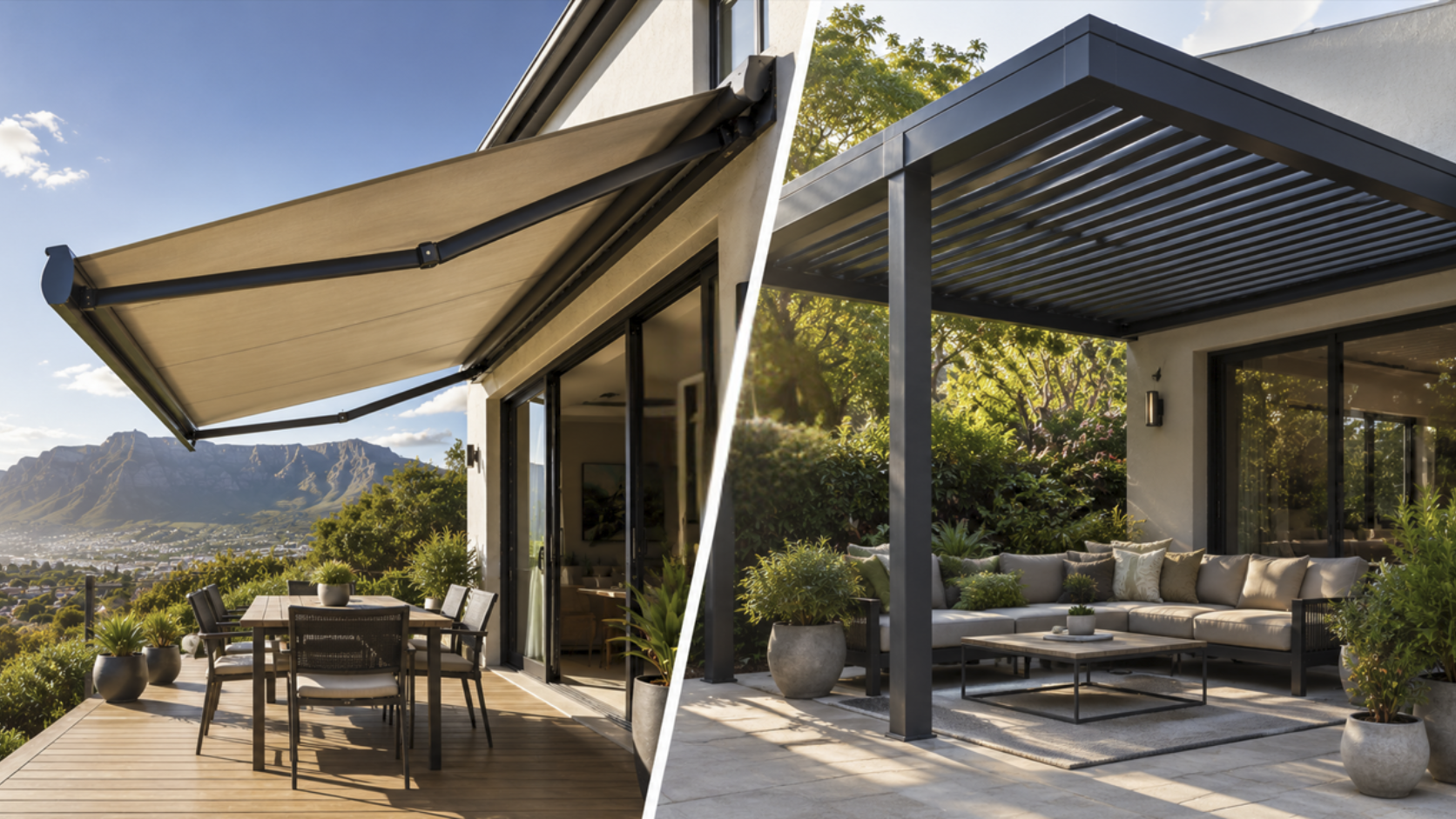
Awning colour and fabric selection is one of the most commonly underestimated decisions in the whole process — and one of the most visible once the awning goes up. It's not just an aesthetic call. In South Africa's climate, the colour and fabric type you choose will also affect how hot your patio gets underneath, how long the fabric lasts, and how well it handles the sun, rain, and coastal salt air.
Here's what to consider before you make the call.
1. Heat and UV Reflection: This Matters More in SA Than You'd Think
South Africa's UV index is significantly higher than most of Europe or the UK, where many awning design guides are written. In Durban, Cape Town, or Johannesburg on a clear summer day, you're dealing with UV levels that fade, degrade, and overheat poorly chosen fabrics much faster than in milder climates.
Light colours vs dark colours — what actually happens under the awning:
- Light colours (white, cream, sand, light grey) reflect more solar radiation and keep the space underneath cooler. They're a smart choice for an east or north-facing patio that gets direct afternoon sun.
- Dark colours (charcoal, navy, dark green, black) absorb heat and can make the space underneath noticeably warmer in peak summer. However, they provide better glare reduction — especially useful if you're positioning screens or want to watch TV outside.
- Mid-tones (stone, sage green, taupe, dusty blue) balance heat and glare reasonably well and tend to be the most versatile choice for SA homes.
Practical tip: Hold your colour swatch up in full afternoon sun for a few minutes before committing. The temperature difference between a white and a charcoal swatch is immediately obvious — and that's what your patio will feel underneath.
2. Matching Your Home's Exterior — Without Overthinking It
The most common mistake is choosing a colour in isolation. Your awning will be seen against your roof, your walls, your window frames, and your garden. Getting this wrong creates visual clutter even when the awning itself is a good product.
Three approaches that work reliably:
- Match a feature colour already on the home — gutters, window frames, or front door. A charcoal awning on a home with charcoal gutters and fascia reads as designed rather than added-on.
- Match the garden tone rather than the house — if your garden is lush green, a sage or forest green awning blends naturally into the outdoor context. If you have a dry, sandy garden aesthetic, sand or stone tones anchor the awning visually.
- Go neutral when in doubt — stone, natural canvas, or warm grey will not clash with any exterior colour scheme and give you flexibility to repaint or update your home's look without the awning looking dated.
What to avoid: matching your awning exactly to your wall colour. When the awning is the same shade as the wall, it disappears visually and the whole installation looks unintentional. You want the awning to read as a deliberate design feature.
3. Solid, Stripe, or Pattern — What Works Where?
Solid colours:
Clean, timeless, and the easiest to match to an existing exterior. Solid colours are the most popular choice for residential awnings in South Africa — particularly for louvre awnings, fixed patio awnings, and retractable canvas where the awning is large enough that a pattern would feel overwhelming.
Stripes:
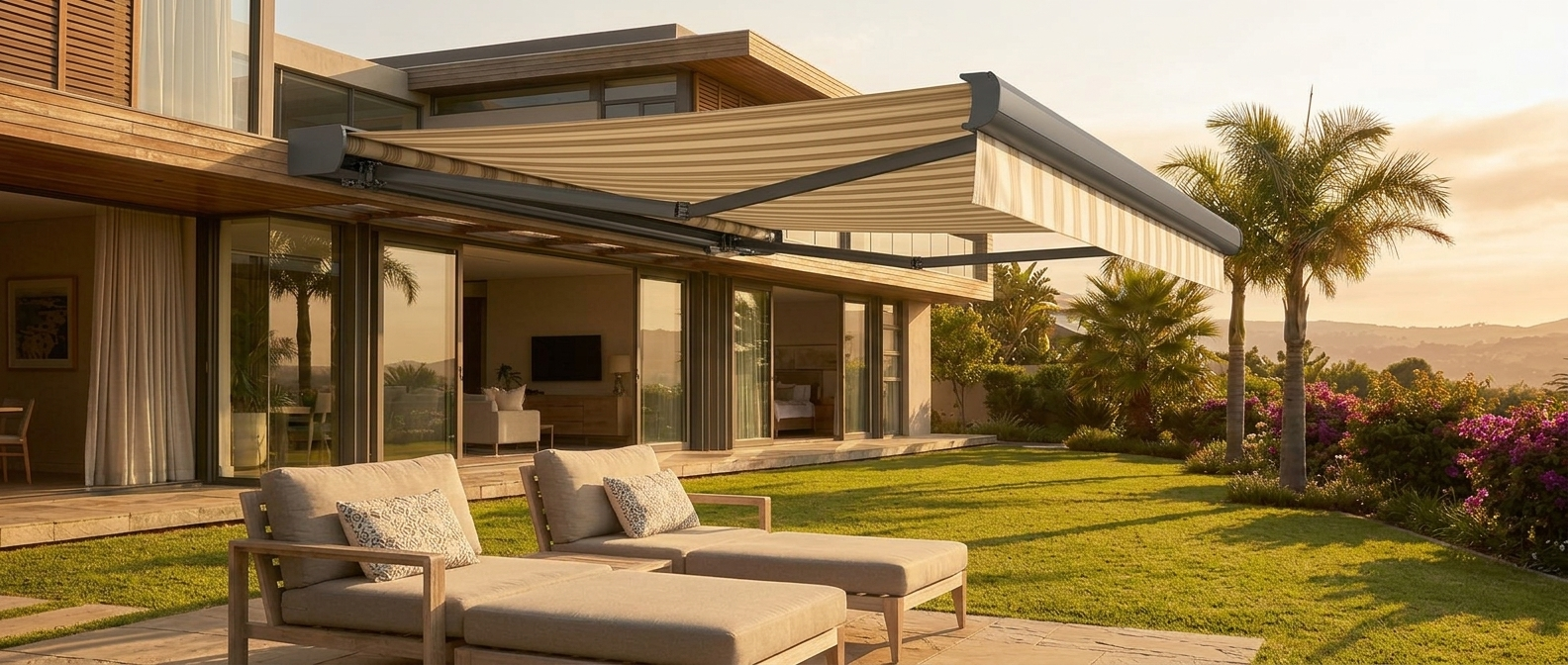
A classic awning aesthetic — traditionally associated with coastal homes, beach houses, and entertainment spaces with a relaxed feel. Awning stripes work well on folding arm awnings and drop blinds where the fabric moves. They add personality but narrow your décor flexibility over time. Works best when one stripe colour ties back to the home's exterior.
Patterns and textured weaves:
Some canvas and acrylic fabric ranges include woven textures or subtle patterns. These add visual depth at close range without the boldness of a stripe. A good option if you want something with character but don't want the full stripe look.
4. Fabric Type — Durability Is Not Just About Colour
The fabric or material you choose is as important as the colour. For canvas awnings (folding arm, drop blinds, zip track), the two main fabric types are:
Solution-dyed acrylic (e.g., Dickson, Sunbrella, Glen Raven fabrics):
The colour runs through every fibre — it's not a surface coating. This means UV, rain, and salt air degrade the fabric much more slowly because there's nothing to bleach or peel. Solution-dyed acrylic is the gold standard for SA conditions, particularly coastal and high-UV inland areas. It's also treated to resist mould and mildew — critical in humid climates like KZN.
Standard polyester/canvas weaves:
Lower cost, but the colour is applied to the surface, which means UV degradation is visible faster — typically as fading and lightening of the original colour. In a shaded installation or a low-sun environment this may be acceptable, but in full western or northern sun exposure it will look tired within a few years.
Recommendation: for any awning in direct sun exposure in South Africa — which is most of them — specify a solution-dyed acrylic fabric. The price difference is modest compared to the installation cost, and the lifespan difference is significant.
5. Colour by Use Case — A Quick Reference
| Use Case | Recommended Colour Range | Why |
|---|---|---|
| North/west-facing entertainment patio | Light tones — cream, sand, light grey | Reflects heat, keeps the space cooler |
| Pool or garden shade structure | Sage green, forest green, natural canvas | Blends into the garden, neutral on the home |
| Outdoor TV / screen viewing area | Mid to dark tones — charcoal, slate, dark navy | Reduces glare, improves screen visibility |
| Coastal home (salt air, UV, humidity) | Classic stripes or marine-grade neutrals | Coastal aesthetic + specify solution-dyed acrylic |
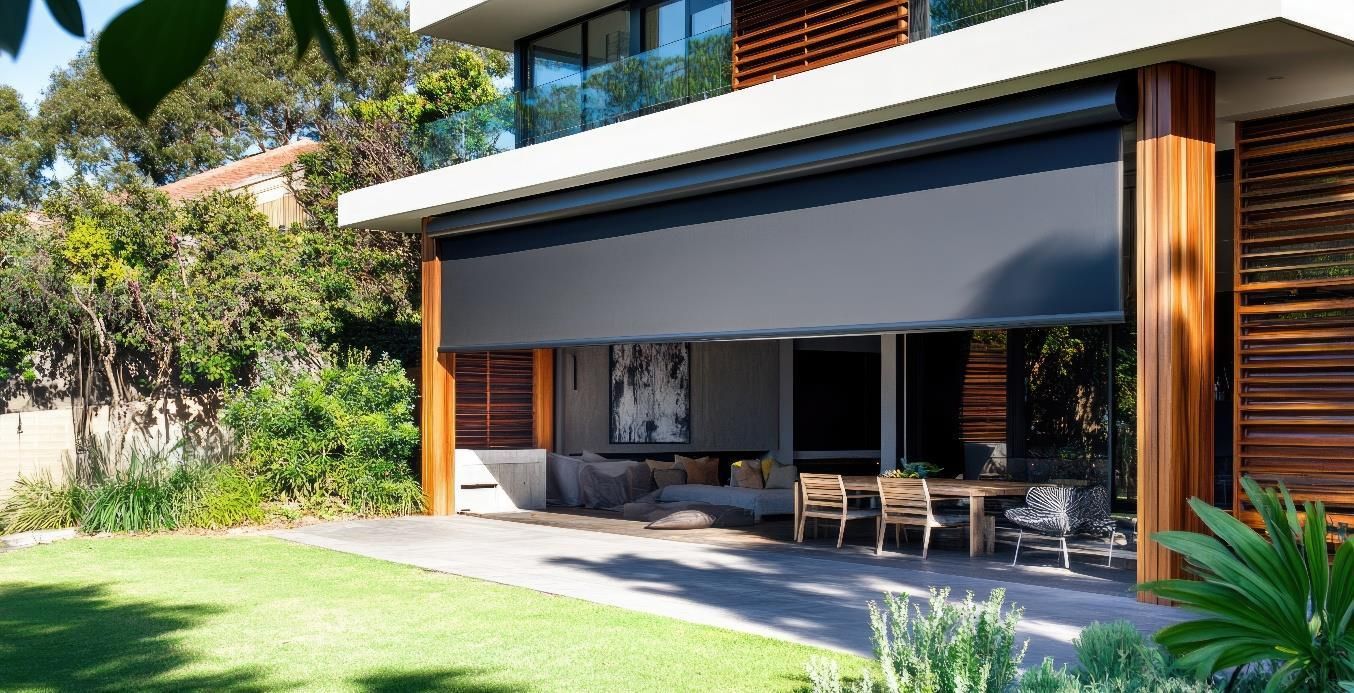
| Modern minimalist home | Charcoal, anthracite, matte black | Matches clean architectural lines, strong contrast |
Before You Decide: Request a Sample
Reading about colours and looking at a digital screen are two very different things from holding a fabric swatch in your hand on your own patio, in your own afternoon light. If you're choosing a canvas awning — folding arm, drop blind, or retractable — ask Awning Warehouse for a fabric sample before you confirm your order.
The team can also advise on what colours work best for your specific awning type, your home's exterior, and your local climate. It's a five-minute conversation that saves months of looking at a colour you wish you'd thought harder about.
🎨 Request a Fabric Sample or Free Quote — awningwarehouse.co.za/contact/
→ Related reading: Patio Roof vs Awning South Africa: Which Is Right for Your Home? (M6 pillar)
→ Related reading: Folding Arm Awnings South Africa: The Complete Guide
→ Related reading: How Much Does an Awning Cost in South Africa?