Patio Roof vs Awning in South Africa: Which Is Right for Your Home?
If you're planning to shade your patio or outdoor entertainment area, you've probably hit a fork in the road: do you go with a proper patio roof, or is an awning enough? On the surface, both solve the same problem — they give you shade. But the differences in cost, permanence, weather protection, and what your body corporate will allow are significant.
At Awning Warehouse, we supply and install both, so this isn't a sales pitch for one over the other. It's a practical guide to help you decide which solution fits your home, your budget, and your lifestyle.
1. What's the Actual Difference?
The simplest way to think about it:
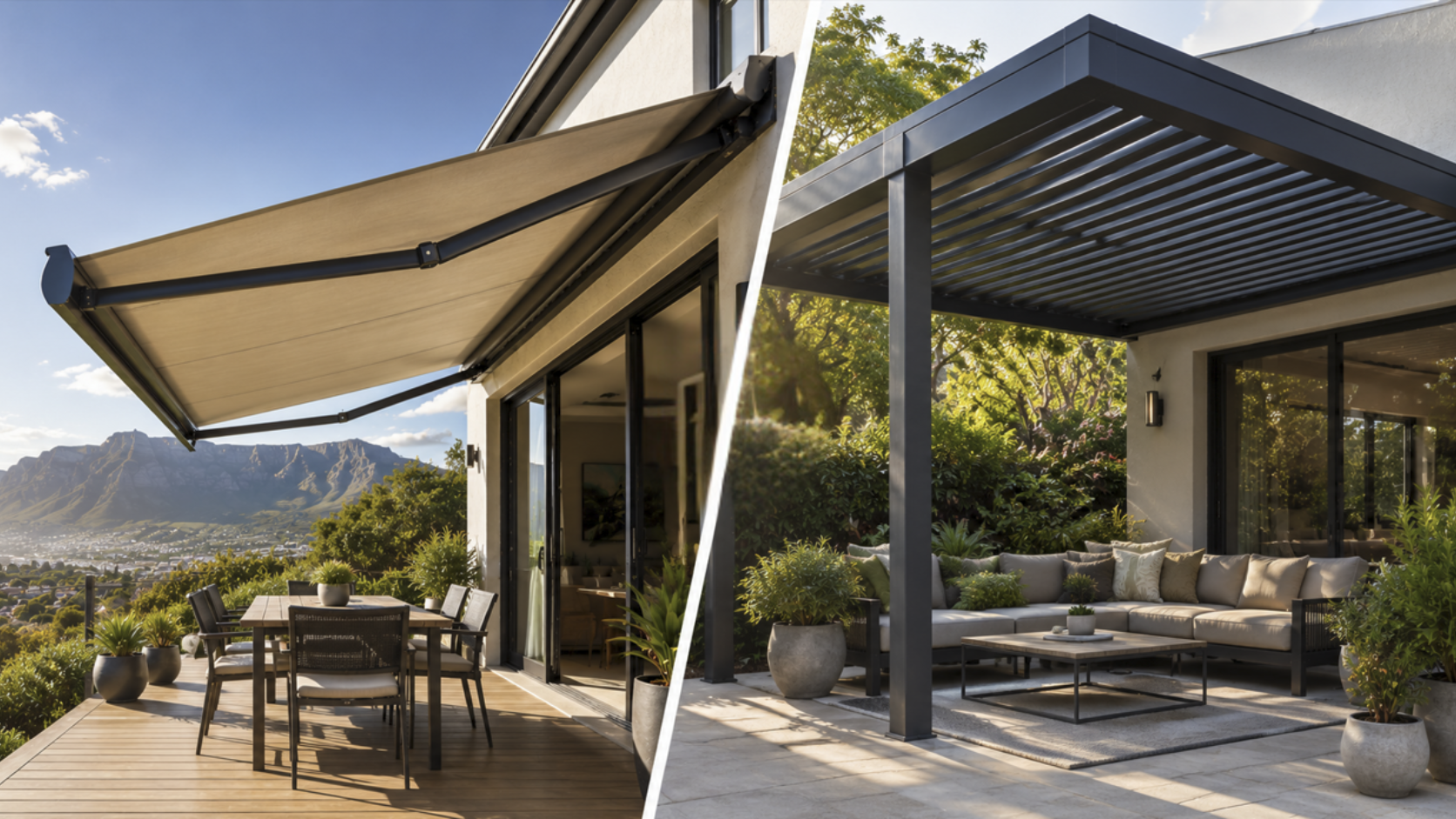
- A patio roof is a permanent structure — it has a fixed frame, is attached to your home or freestanding, and is designed to stay in place year-round.
- An awning is a shade covering — it can be retractable or fixed, is generally lighter in construction, and is easier to adjust, move, or eventually replace.
Both can be made from similar materials (aluminium, canvas, polycarbonate), but a patio roof is built to the standard of a minor extension to your home. An awning is more of a functional fitting.
Common patio roof types at Awning Warehouse:
- Insulated Ceiling Patio Roof — a sandwich panel roof that keeps heat out and looks like an interior ceiling finish; ideal for year-round entertainment rooms.
- Fixed Patio Roof — a solid, permanent cover, typically IBR or polycarbonate sheeting on a steel frame.
- Multiwall Polycarbonate Patio Roof — lets filtered light through while blocking UV; lighter and more affordable than insulated options.
Common awning types at Awning Warehouse:
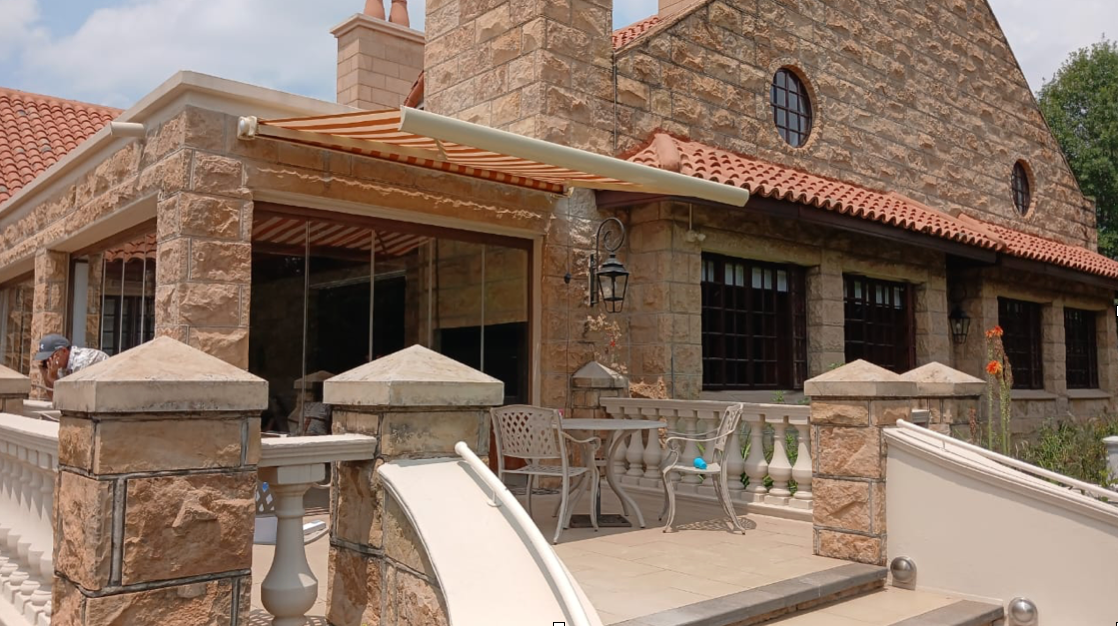
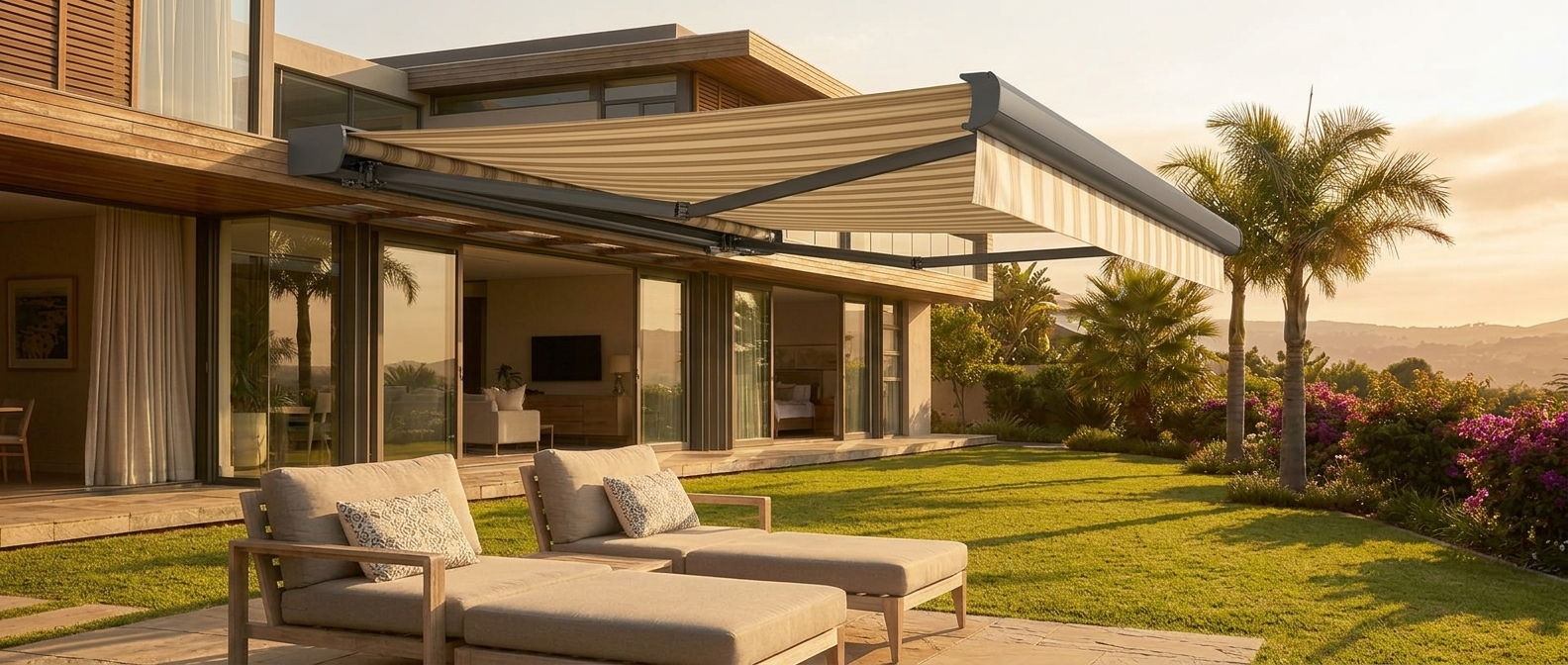
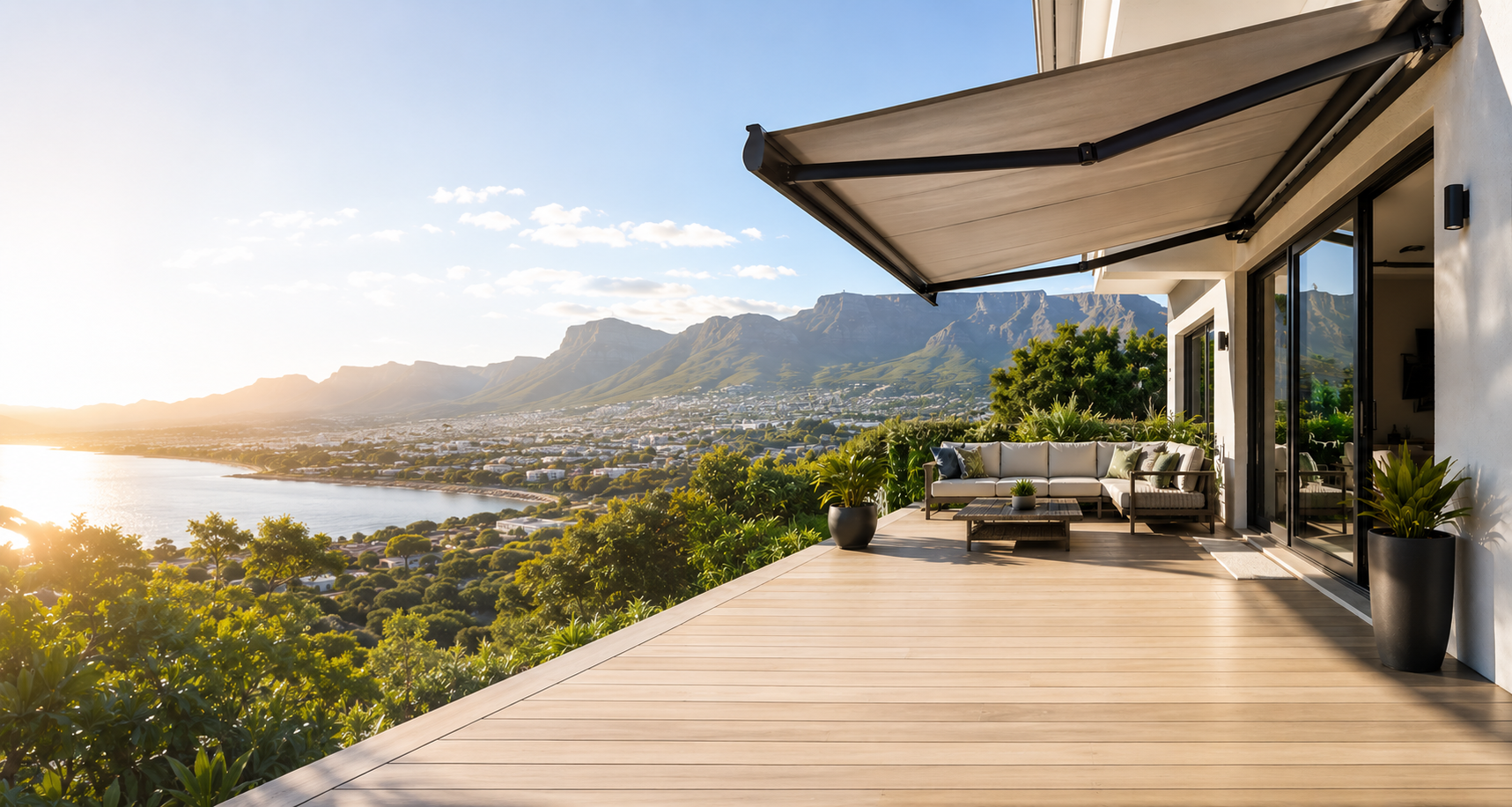
- Folding Arm (Retractable) Awnings — extend and retract as needed; ideal for flexible shade over a deck or braai area.
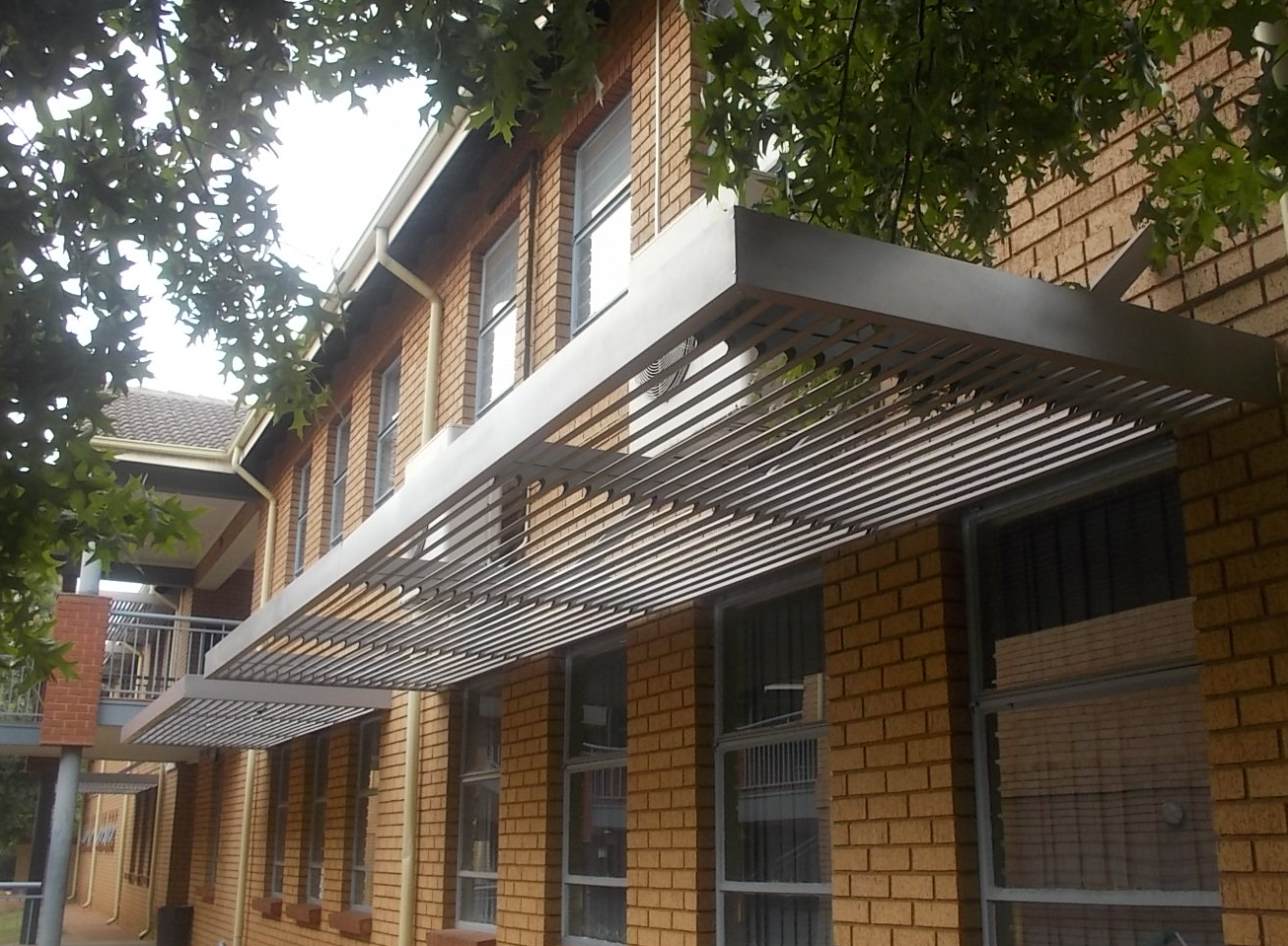
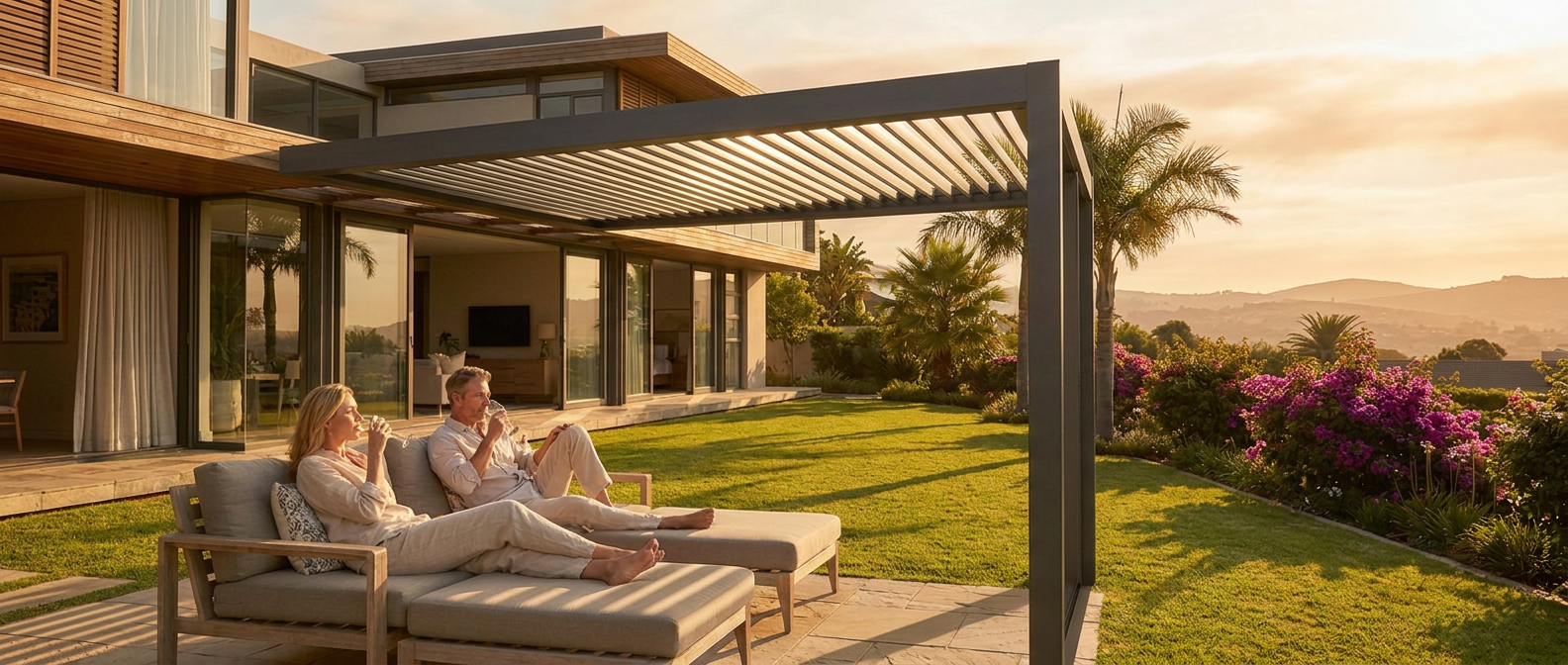
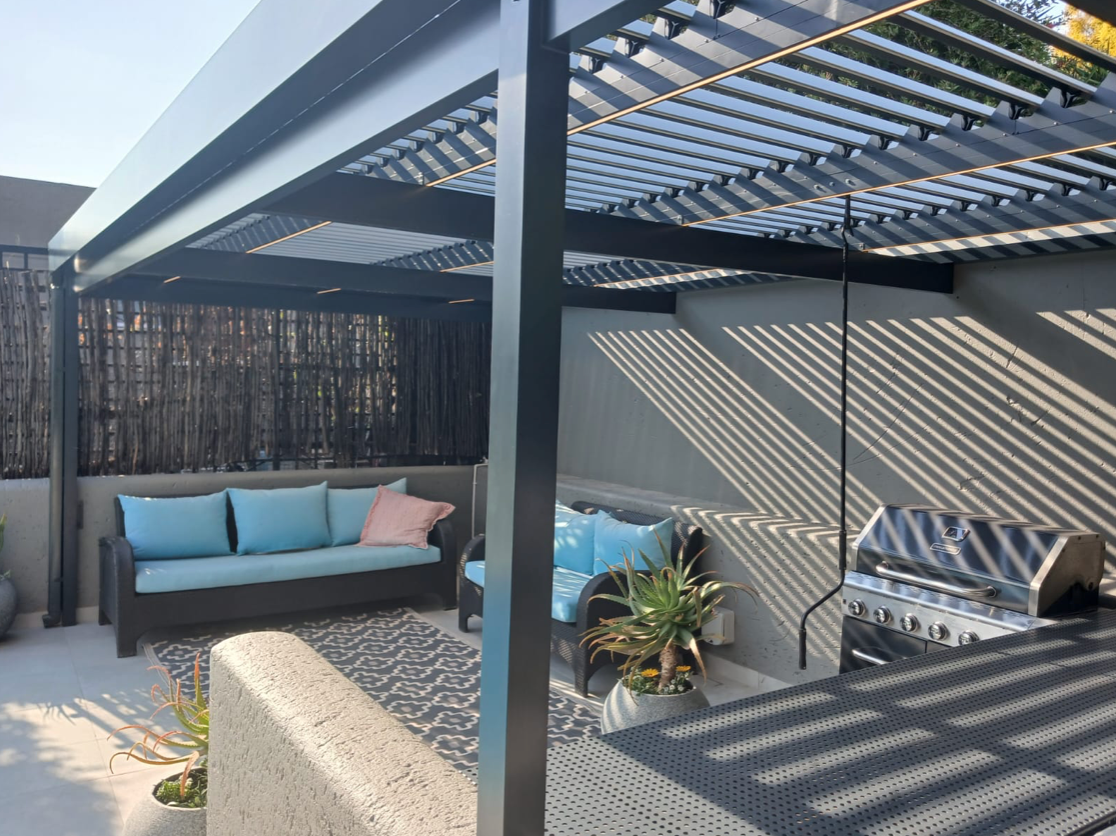
- Aluminium Louvre Awnings — adjustable louvres that let you control light and ventilation; a popular middle ground between awning and roof.
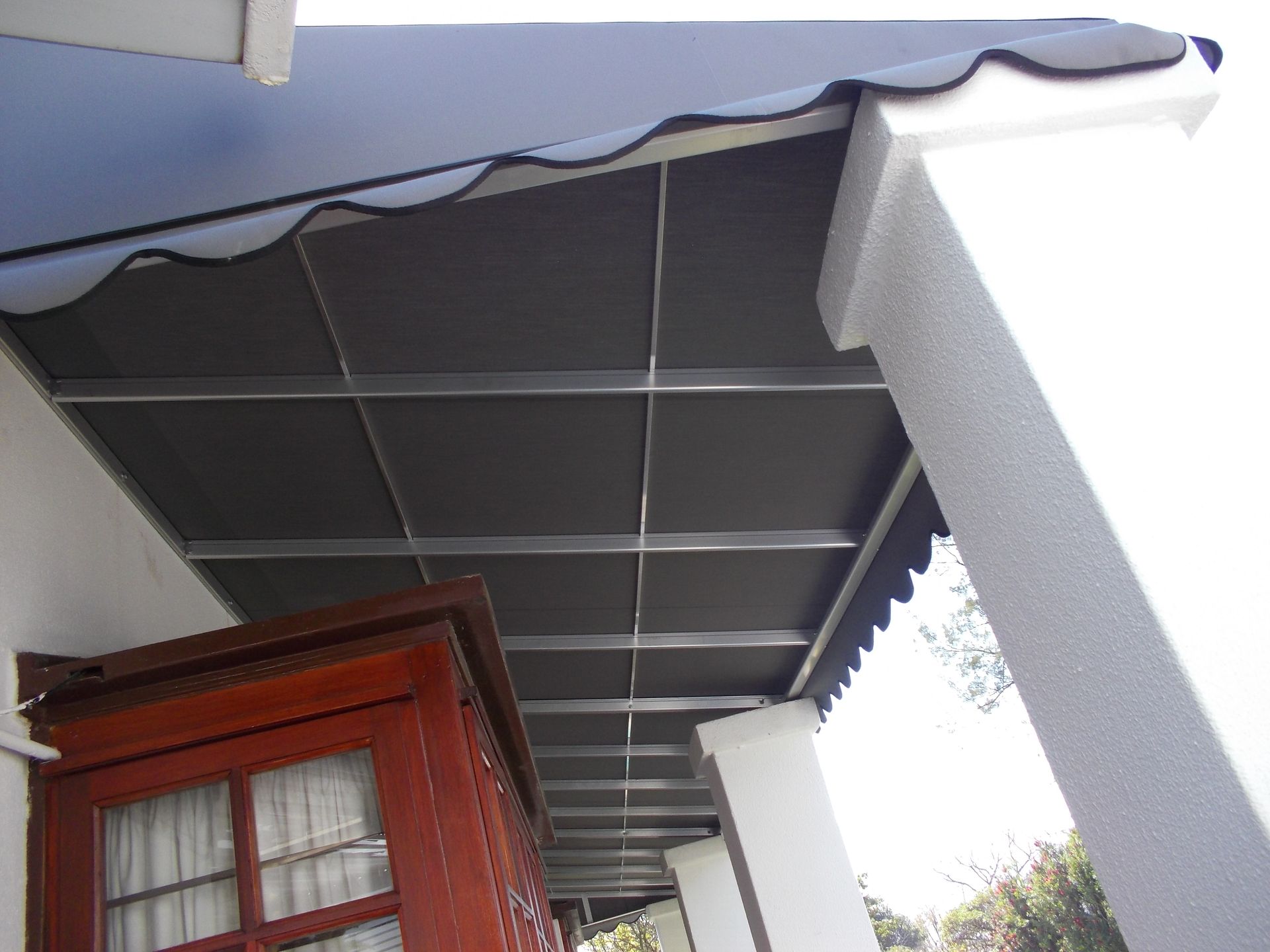
- Fixed Patio Awnings — fixed projection from the wall or roof; permanent in position but lighter than a full patio roof structure.
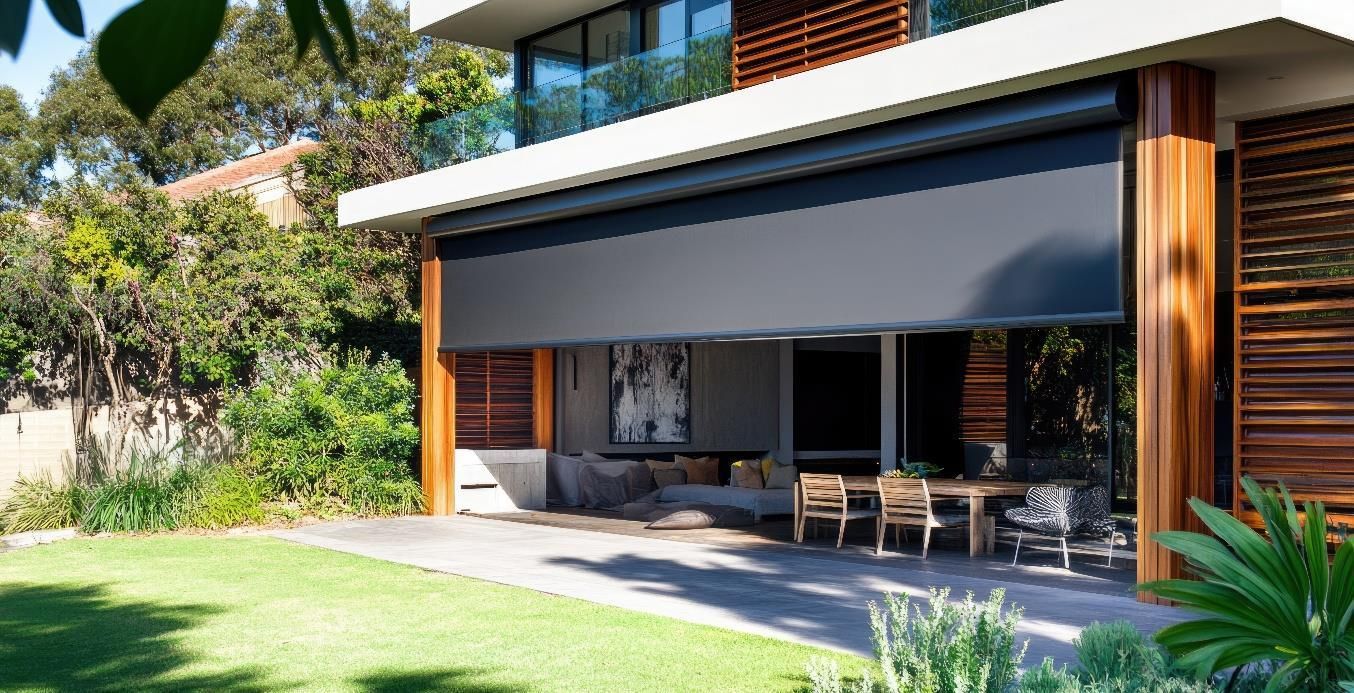
- Retractable Patio Shade Awnings — wider-span retractable systems for larger entertainment areas.
2. Five Questions to Help You Decide
Question 1: Do you want permanent cover or flexible shade?
If you're building an outdoor room you'll use regardless of the weather — a braai room, a family entertainment area, a room that doubles as extra living space — a patio roof is the right call. It's there whether you want it or not, which is a feature when it's raining and a non-issue when it's sunny because the structure is open on the sides.
If you prefer to have sun on the patio when the weather is good and shade only when you need it, a retractable awning is far more practical. You can extend it in the afternoon when the western sun hits, and roll it back in winter to let the light in.
Question 2: What's your budget?
As a general rule, patio roofs cost more than awnings because they are more material and more labour. A basic polycarbonate patio roof starts higher than a standard canvas awning, and an insulated ceiling patio roof is a significant investment — but it also adds more to your property's value and liveability.
Awnings offer better entry-level value for shade. A manual folding arm awning over a 3–4 metre patio is significantly more accessible than a full roof structure of the same span.
That said, a premium motorised louvre awning system with a cassette cover can cost as much as a modest polycarbonate roof — so the price bands do overlap at the high end.
→ See our full guide: How Much Does an Awning Cost in South Africa?
Question 3: What about wind, rain, and SA weather?
South African weather varies dramatically depending on where you live. KwaZulu-Natal's coastal humidity and summer storms are very different from Gauteng's afternoon highveld thunderstorms or the Western Cape's winter rain.
- Patio roofs handle rain properly. A correctly installed insulated or polycarbonate roof channels water away via gutters and won't be affected by wind load within normal structural limits. You can sit under a patio roof in a downpour.
- Awnings handle sun and light rain. Canvas awnings are water-resistant but not waterproof under sustained rain. Retractable awnings should be retracted in high wind and heavy rain to protect the mechanism and fabric.
- Louvre awnings sit between the two — the aluminium louvres can be closed in rain to provide reasonable cover, and the frame is built to handle SA wind conditions.
If you live in a high-wind coastal area or experience regular heavy rain in your outdoor area, a patio roof gives you more year-round reliability. If your area is predominantly dry with occasional afternoon showers (typical Gauteng summer), a quality retractable awning with a wind sensor is a practical and cost-effective solution.
Question 4: What will your HOA or body corporate allow?
This is the question people most often forget — and it can derail a project after you've already fallen in love with the design.
- Patio roofs typically require submission to the body corporate or HOA as a structural addition. Some developments have strict rules about roof materials, colours, or heights. Some require municipality building approval as well, depending on the size.
- Awnings are generally viewed as functional fittings rather than structural additions and are often permitted with a simpler approval process or no formal submission. However, developments with strict aesthetic guidelines may still regulate colour and style.
Always check with your HOA or body corporate before committing to either option. Awning Warehouse can advise on what documentation is typically required.
Question 5: How long do you plan to stay in the property?
If you're planning to sell within a few years, the return on a full patio roof is better than an awning — it adds structural value, photographs well, and is often listed as a feature. A retractable awning adds lifestyle value but is technically a fitting that the buyer may or may not value the same way.
If you're renting or not planning a long-term stay, an awning is a more sensible investment — lower outlay, and in some cases, removable if you move.
3. At a Glance: Patio Roof vs Awning
| Factor | Patio Roof | Awning |
|---|---|---|
| Permanence | Permanent structure | Fixed or retractable |
| Rain protection | Full (waterproof) | Partial / weather-resistant |
| Entry cost | Higher | Lower to moderate |
| HOA approval | Usually required | Often simpler / not required |
| Flexibility | Fixed — always covered | Adjustable / retractable options |
| Property value | Strong structural addition | Lifestyle upgrade / fitting |
4. The Middle Ground: Louvre Awnings
If you're torn between a patio roof and a standard awning, there's a third option worth considering: an aluminium adjustable louvre awning.
Louvre awnings use rotating aluminium blades — similar in concept to a louvre window — that you can tilt to control light, airflow, and rain shelter. When fully closed, a quality louvre system provides reasonable rain cover. When open, it's effectively a pergola frame that lets the sky in.
They're mounted on a frame that gives the look and feel of a permanent structure, but they're classified as an awning fitting rather than a structural roof — which often makes HOA approval simpler. Many Awning Warehouse clients who can't get body corporate sign-off on a full roof structure find that a motorised louvre awning satisfies both their practical needs and their HOA requirements.
→ Read more: Louvre Awnings South Africa: The Complete Guide to Adjustable Shade Solutions
5. What to Do Before You Request a Quote
Whether you're leaning towards a patio roof or an awning, these steps will help your consultation go faster:
- Measure your space — width, projection depth, and ceiling or wall height.
- Check with your body corporate or HOA — ask about any rules on permanent structures, materials, or colours before you commit.
- Think about how you'll use the space — year-round braai room vs occasional afternoon shade changes the recommendation significantly.
- Consider your load-shedding reality — motorised systems with rechargeable battery backups or solar compatibility are worth discussing if your area has frequent outages.
- Get photos of your home's exterior — Awning Warehouse's team will advise on what works aesthetically with your roofline, fascia, and colour scheme.
Still Not Sure? Talk to the Team
The honest answer is that there's no universally correct choice — it depends entirely on your space, your budget, your body corporate, and how you want to live in that outdoor area. What Awning Warehouse does is manufacture and install both, so our advice isn't skewed towards one product.
Request a free, no-obligation quote and our team will assess your space, answer your HOA questions, and recommend the right solution for your home.
📋 Request a Free Quote — awningwarehouse.co.za/contact/
→ Related reading: Folding Arm Awnings South Africa: The Complete Guide
→ Related reading: Louvre Awnings South Africa: The Complete Guide
→ Related reading: How Much Does an Awning Cost in South Africa?